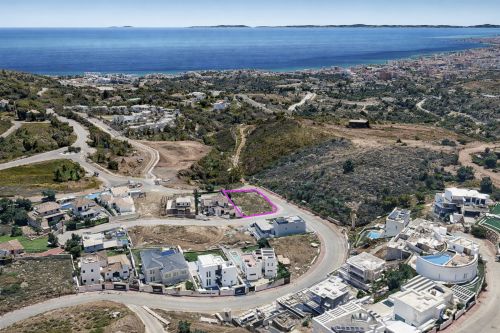
Spanish house prices rose 12.9% in the year to the first quarter of 2026 on the INE’s house price index. Inside that figure, new build rose 9.1% and resale rose 13.5%. In Andalucía the same index put the Andalucía housing market at 13.3% overall, with new build at 11.3% and resale at 13.6%.
Resale outrunning new build is unusual and it is the most useful thing in the release. It is also the clearest signal the Andalucía housing market has given in two years. New build normally leads, because it is newer, better specified and sold by people whose job is to hold a price. When the older stock is rising faster than the new, something has gone wrong with supply rather than right with demand.
Why resale is leading the Andalucía housing market
The explanation is that there is not enough new build to lead with. Completions across Andalucía have run well below household formation for most of a decade, and the schemes that do finish are concentrated in a handful of coastal municipalities. Everywhere else a buyer who wants to move is competing for a home that already exists.
That pushes the whole weight of demand onto the resale market, and resale pricing responds faster than new build pricing because it is set by thousands of individual sellers rather than by a few dozen developers with a price list to defend. When a market tightens, resale moves first and it moves further.
It also means the headline rate understates what is happening in the parts of the Andalucía housing market people actually want. A regional index averages Almería with Málaga, and inland Jaén with the coast. The coastal figure sits well above the regional one, which is why the index is a direction of travel rather than a valuation. The coastal part of the Andalucía housing market has not behaved like the regional average for a decade.

What an Andalucía housing market index actually measures
The INE index is a price index, not an average price. It measures how much the same kind of property has moved, which is a different question from what anything costs. A 13.3% annual figure for Andalucía does not mean a flat in Málaga is 13.3% dearer than the one next door was last year, and it certainly does not mean any individual property has gained that.
It is also regional. The INE does not publish a municipal series, so anybody quoting an index figure for Marbella or Estepona has taken a regional number and attached a town name to it. We do not do that, and it is worth noticing when somebody else does.
For a town level picture the honest sources are the deeds themselves, through the Notariado, and the registration volumes from Registradores. Those tell you what actually changed hands and at what value, and they are what our quarterly report is built on.
The Costa del Sol version of the Andalucía housing market
On the coast the pattern is the same shape and a good deal sharper. Marbella, Estepona and Benahavís recorded 1,566 residential sales in the first quarter, 30.2% fewer than a year earlier on Registradores figures, while pricing held. Resale accounted for 90.3% of those transactions against 9.7% for new build.
That ratio is the whole argument in one line. Nine in ten purchases on this coast are of a home that already exists, in a market where international buyers consistently say they want something new. The Andalucía housing market is not short of demand for new build, it is short of finished new build to sell.
We covered the quarter itself in more detail in the Q1 2026 Costa del Sol figures, including the town by town split and why Estepona fell further than Marbella. This post is about why the composition looks the way it does rather than about the volume, because the composition is the part that tells you what to do next.
Financing has improved and it changes the interior more than the coast
Euribor fell to 2.34% by the first quarter of 2026 and average Spanish mortgage rates to 2.99%, both continuing a decline that has run for over a year. For a domestic buyer in Seville or Granada that is the single biggest change in their position since 2022, and it is why the interior of the region is picking up at all.
On the coast it matters much less, because a large share of purchases are made without a mortgage. Cheaper money still helps indirectly, by speeding up the chain of transactions underneath a prime sale, but it is not what decides whether a villa in Benahavís trades.
The result is that the two halves of the Andalucía housing market respond to entirely different inputs. One is a rates story and one is a supply and currency story, and a change that moves one of them can leave the other completely unaffected. Reading one rate cut as a signal for both is how most forecasts for this region go wrong.
Foreign demand is what splits the Andalucía housing market
Málaga Province recorded a foreign buyer participation rate of 34.3% in the first quarter against a national average of 13.92%. More than one purchase in three, against roughly one in seven nationally. No other part of Andalucía comes close to that concentration, and no other part of the Andalucía housing market prices the way Málaga does because of it.
It matters because foreign demand is not rate sensitive in the way domestic demand is. A buyer moving equity from another country and paying cash is not waiting on Euribor, so the coastal market keeps clearing through periods when the interior slows. That is the real reason the Andalucía housing market splits so cleanly between the coast and everywhere else.
The composition of that demand has also widened. British buyers remain the largest single group nationally, with Dutch, German, Italian, French and Polish purchasers close behind, and growing volumes from North America and the Gulf. A market spread across that many economies does not turn on one of them having a bad year.
What the Andalucía housing market pipeline does not contain
The supply answer, if there is one, arrives slowly. Land with planning consent, a licence and a builder is a three to four year proposition even when everything goes right, and on this coast a good deal of the land with sea views is either built, protected or tied up in a planning process that has been running for years. Nothing about the next twelve months changes the number of finished homes available in 2027.
What does change is the mix. The schemes that complete are overwhelmingly at the upper end, because that is what pencils when land and construction cost what they now cost. A region with a genuine shortage of ordinary housing keeps delivering expensive housing, which widens the gap between the index and what a local buyer experiences.
That is the structural fact underneath every number in this post. The Andalucía housing market is not tight because of a cycle, it is tight because the pipeline that would loosen it does not exist yet. Anybody waiting for supply to solve their pricing problem is waiting for something that has not been started.
An Andalucía housing market running at two speeds
Set the coastal strip aside and the Andalucía housing market looks like a normal Spanish region. Prices are rising because supply is tight, buyers are largely domestic, and mortgage conditions matter a great deal. Seville, Granada and Córdoba are all recognisably that market, and all three are strengthening as borrowing gets cheaper rather than as buyers arrive.
The coastal municipalities are something else. They compete for buyers with the south of France and the Algarve rather than with the rest of Andalucía, they price in relation to those places, and their supply constraint is planning rather than money. Averaging the two produces a number that describes neither.
This is the single most common error in coverage of the region, and it runs in both directions. A regional slowdown gets reported as a coastal one, and a coastal boom gets reported as a regional one. Anyone deciding where to put money needs the two separated, which is the whole reason we publish town level figures rather than regional ones.
Where the Andalucía housing market leaves a buyer
If the resale stock is what is rising fastest, then the resale stock is where the competition is, and the sensible response is to be quicker and better prepared rather than to wait for a correction that the supply picture does not support. Good resale in the established areas does not sit for long at a sensible price. The Andalucía housing market has spent three years teaching people that lesson and it has not stopped.
The corollary is that homes needing work are where the negotiation still lives. They take longer to sell, they attract fewer bidders, and the gap between asking and achieved is wider on them than on anything turnkey. That is a genuine opportunity for a buyer willing to run a refurbishment, and it is a larger part of the market here than most people expect.
The running costs are where that calculation is usually won or lost, and they are municipal rather than regional. Estepona has just cut its property tax by 20% for registered residents, which is the sort of local detail an index will never show you. We hold the cost of ownership data for the constructed developments across this coast, built up over years, so a specific property can be set against comparable ones before anybody commits.
For anyone weighing it now, the Marbella market report and the Estepona report carry the town level figures, the buyer’s guide covers the costs that arrive with completion, and the current listings show what the range actually looks like in the Golden Mile, Estepona and Benahavís. If you are selling, our valuation calculator and the seller’s guide are the fastest way to see where you stand against this quarter rather than last year.
How much did house prices rise in Andalucía in 2026?
The INE house price index put the Andalucía housing market at 13.3% annual growth in the first quarter of 2026, with new build at 11.3% and resale at 13.6%. Spain as a whole was at 12.9%. These are index figures for the region, not average prices for any town.
Why is resale rising faster than new build in Andalucía?
Because the Andalucía housing market does not have enough new build to lead it. Completions have run below household formation for years and are concentrated in a few coastal municipalities, so demand falls on the existing stock, where prices are set by thousands of individual sellers and move faster.
Is the Costa del Sol part of the Andalucía housing market or separate?
Statistically it is inside the region and behaviourally it is a different market. Málaga Province recorded a 34.3% foreign buyer share against a 13.92% national average, and the coast competes with the south of France rather than with Seville. Averaging the two describes neither.
Can I use the INE index to value a property in Marbella?
No. The INE publishes at regional level and measures change rather than price, so an Andalucía figure attached to a town is somebody’s estimate. For a specific property the honest sources are registered deeds and comparable completions, which is what we work from.
Where are the best opportunities in the Andalucía housing market right now?
In resale that needs work, which takes longer to sell and negotiates harder than anything turnkey, particularly now that the rules on minor works have loosened in Marbella. Tell us the budget and how much disruption you will tolerate and we will show you where that trade actually pays.
The Costa del Sol property market continues to evolve, but informed decisions begin with reliable data. Download the JUST Q2 2026 Golden Triangle Market Report today and gain exclusive insight into one of Europe’s most resilient and internationally driven residential markets.

DOWNLOAD OUR Q2 2026 MARKET REPORT NOW
Free to read and free to quote, provided any figure is attributed to JUST Real Estate and names the edition it came from.
Research enquiries:
James Evans — Managing Partner
📞 +34 643 390 376 | ✉️ james@justrealestate.es
Sales enquiries:
Alina Nouaimeh — Partner
📞 +34 600 689 749 | ✉️ alina@justrealestate.es
FAQ
Is the JUST Market Report free to download?
Yes. The report is available as a complimentary download and provides professional analysis of the Marbella, Estepona and Benahávis property markets.
Who is the report designed for?
The report is written for buyers, sellers, investors, developers, relocation clients, family offices and anyone seeking accurate, data-led insight into the Costa del Sol property market.
Where does the data come from?
Our analysis uses official information from Registradores de España, INE, Notariado, Tinsa, Banco de España and other recognised industry sources, combined with our own market observations and research.
How often is the report updated?
JUST Real Estate publishes a comprehensive market report every quarter, ensuring readers have access to the latest available market intelligence.
Our latest listings
View our latest listings of luxury properties for sale, where sophistication and comfort come together for an exceptional living experience.

5 bedroom villa for sale in Mijas
- 5 beds
- 6 baths
- Plot: 1,805 m²
- Interior: 465 m²
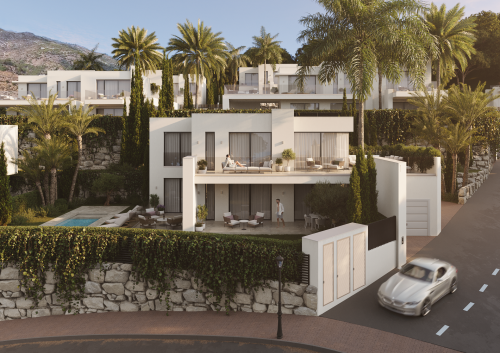
4 bedroom villa for sale in Mijas Pueblo, Mijas
- 4 beds
- 4 baths
- Plot: 580 m²
- Interior: 150 m²
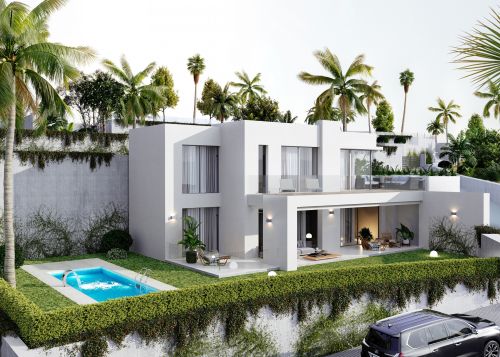
4 bedroom villa for sale in Mijas
- 4 beds
- 4 baths
- Plot: 580 m²
- Interior: 150 m²

3 bedroom apartment for sale in Mijas
- 3 beds
- 2 baths
- Plot: 34.98 m²
- Interior: 79 m²
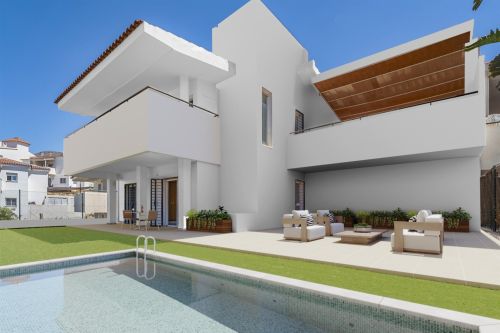
4 bedroom house for sale in Mijas Pueblo, Mijas
- 4 beds
- 3 baths
- Plot: 340 m²
- Interior: 186.8 m²
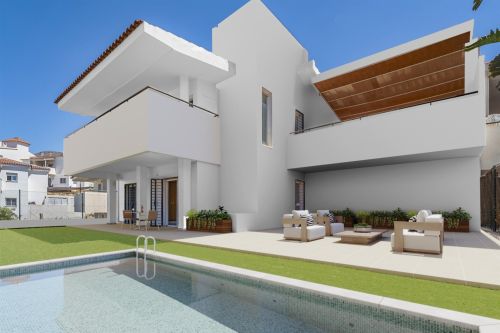
3 bedroom house for sale in Mijas Pueblo, Mijas
- 3 beds
- 2 baths
- Plot: 340 m²
- Interior: 164.82 m²

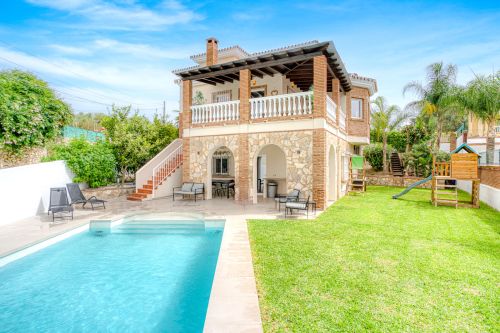
6 bedroom villa for sale in Mijas
- 6 beds
- 4 baths
- Plot: 658 m²
- Interior: 360 m²

5 bedroom house for sale in Valtocado, Mijas
- 5 beds
- 4 baths
- Plot: 41,000 m²
- Interior: 378 m²
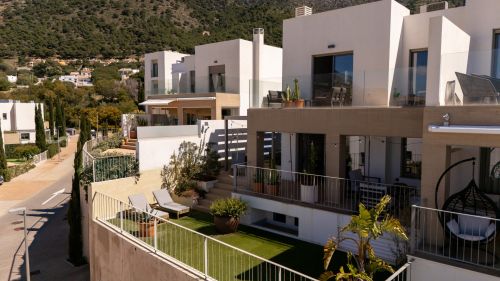
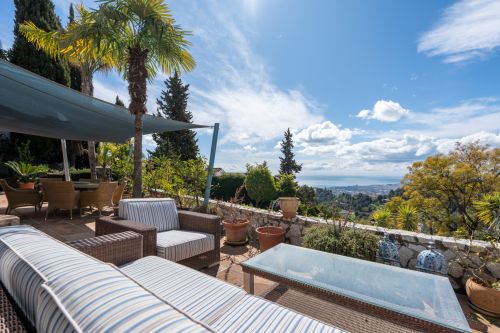
4 bedroom villa for sale in Mijas Pueblo, Mijas
- 4 beds
- 4 baths
- Plot: 1,974 m²