The latest Marbella PGOM news is that the plan was approved on Friday 18 September 2026, ending four decades on a planning framework that dates from 1986. The extraordinary plenary passed it with the votes of the governing PP, OSP and VOX while the PSOE abstained, and the council’s own announcement calls it the first in Andalucía adapted to the LISTA, the regional planning law.
We set out the clock behind the vote and the transitional rules in our earlier piece on the five changes on day one, written before the plenary met, and our guide to the Marbella general plan covers the whole document. This post covers the Marbella PGOM news beyond the vote itself, meaning the figures the council put on the record and what still waits for the detailed plan, using the council’s statement of the day and the press coverage that followed.
The Marbella PGOM news from the vote on 18 September
The mayor, Ángeles Muñoz, described the document as a plan for the city made by and for Marbella and said the approval opens a new stage. José Eduardo Díaz, the councillor for urban planning, called it the culmination of years of technical work, studies and public participation, and added that the vote is the starting point for turning the plan into concrete projects rather than the end of the process.
Neither opposition group argued against having a new plan. VOX backed it, and its spokesman, Eugenio Moltó, made clear that a vote in favour did not mean agreeing with every provision, justifying his support by the need for up to date planning. The PSOE spokeswoman, Isabel Pérez, called a new plan essential but abstained, and criticised the removal of the Ciudad del Tiempo Libre equipment system and the treatment of the municipal stadium.
The council says the document passed every stage of review with favourable opinions, including the regional government’s, which we reported when the Junta backed the plan. Málaga Press counts more than 60 sectoral reports, all favourable. Having gathered its opinions before the vote, the plan starts from a stronger position than one still waiting on them.
Forty years under the 1986 plan
The plan that governed Marbella until this month classified about 40 million square metres of land as urban, and it was drawn for a town that looks nothing like today’s. The city has tried to replace it before. The regional government approved a revised plan by an order of 25 February 2010, and the Supreme Court annulled that order and the plan itself in rulings of 27 and 28 October 2015, as the council’s own planning site records.
The annulment left Marbella on the 1986 framework for a further decade while the new plan was prepared. It received its initial approval on 30 March 2023, the regional government signed off the final document in February 2026, and the plenary voted on 18 September. Each of those dates is one a buyer or an owner can now point to when a planning question comes up.

53 million square metres of urban land in the new PGOM
The headline number is the land. The council puts urban land under the PGOM at 53 million square metres against about 40 million under the 1986 plan, a gain of roughly 13 million, and says the plan makes provision for new developments, public housing, infrastructure, facilities, green areas and space for economic activity. Euro Weekly News reports that around 3 million square metres of urban land has yet to be developed, creating room for future homes, businesses, services and infrastructure.
Classifying land as urban is the foundation of a project and never the licence itself. A plot classified as urban under the new plan still needs the detailed rules, the infrastructure and the permits that follow before anything is built on it, and the detailed rules are the job of the POU. What the classification settles is which land the city expects to grow onto, so a developer, an owner or a buyer can plan around a known map rather than a contested one.

We hold cadastral and planning records across the municipality, built up over years of due diligence, and setting a plot against the new classification is the first exercise we run for any owner or buyer with land in mind. Ask us for the position on a specific plot and we will tell you where it sits in the PGOM and what the POU is still expected to settle for it.
The 18,000 homes and the new plan
The mayor reminded the plenary that around 18,000 homes in Marbella fell outside urban regularity as a result of the city’s complicated planning history. She described the plan as a guarantee for third parties who acted in good faith and for the families tied to those properties, because it provides a regulatory base from which their situation can continue to be ordered.
Euro Weekly News reads the point carefully. The new framework gives those homes a clearer footing and could bring greater legal certainty for owners and families, but it does not mean every property automatically becomes fully legal. Each home has its own planning position, and the answer for one house can differ from its neighbour’s.
Owners of these homes want their property judged on its own merits, and buyers want a document that will stand up when they come to sell. Both are better served now than at any point since 2015, because the question of a property’s status is argued inside a framework that has just completed its approval process. Where a home is affected, we establish the planning position before a buyer commits and set out what the new framework does for it.
Where the new homes go under the PGOM
The PGOM ties growth to affordable housing. The council says the actions proposed on urban land will reserve 20% of buildability for affordable housing, and the mayor linked new projects to protected and price capped homes, so that growth answers the needs of families, young people and people who work in Marbella.
The largest area of capacity sits at the eastern end of the municipality. Euro Weekly News reports that a development area of around 3 million square metres across El Alicate, La Víbora and La Vizcaína has capacity for up to 6,500 homes, and that combined figure comes from that report rather than from the council’s statement.
Earlier reporting in El Español fills in two of the areas. In April 2026 it put the La Víbora proposal at 2,776 homes with 40% protected, and La Vizcaína at between 685 and 872 homes across more than 62 hectares of Las Chapas, with 40% of the residential buildability reserved for protected or affordable rental housing.

Those were proposals moving through the planning process in April, and neither is a finished project. Euro Weekly News is explicit that the homes will not appear overnight, since further planning, infrastructure and urbanisation work is needed before construction can begin. The Marbella PGOM news on housing is therefore about capacity, delivered in phases over years, and a buyer looking at the east of Marbella should read the figures that way.
The homes that reach the open market from these areas will arrive as new build, and anyone comparing them with existing homes should count the wait as part of the price. Our guide to buying off plan explains how stage payments and bank guarantees work, and our Marbella market report tracks how supply and pricing move quarter by quarter. The homes for sale in Marbella today are the ones a buyer can walk through and complete on this year.
Roads, rail and green corridors
Díaz set out the infrastructure side in some detail. The PGOM reserves space for future mobility infrastructure, including a rail connection, and proposes new road links along with a larger cycle network and more parking. It also ties urban growth to the availability of water supply, sewage and energy, so that development follows the services rather than running ahead of them.
The green side is as deliberate. The councillor described a green, connected and close city in which natural corridors and open spaces strengthen the link between mountain and coast, protecting environmental and territorial values. Marbella has both in a short distance, and the plan writes that geography into its structure.

A plan that binds growth to water, sewage and energy capacity is a plan that expects to build, and it protects the streets around each new area. Owners near the growth areas benefit when services are planned alongside new homes, and buyers benefit from a city that has written that link into the plan.
JUST Real Estate has tracked sold data over many years and has compiled the JUST Intelligence Database™, which holds data no other agency has. We can accurately compare your property to neighboring sales and stats, so our competitive market analysis gives you the advantage in a buyer’s market.
Marbella PGOM news on entry into force and the POU
The council is direct that the plan will be developed in detail by the Plan de Ordenación Urbana, the POU, which is being processed now. Under the LISTA the general plan sets the model, the classification and the structure of the city, while the POU comes down to the block and the individual plot. Both halves are needed before the framework is complete, and only the first has been approved.
Our reading of the plan’s Normativa, set out in our earlier piece, is that the 1986 detailed ordering stays in force until the POU replaces it. An owner in Nueva Andalucía or the Golden Mile asking whether another floor can go on a house gets the same answer after the vote as before it, because heights, buildability and alignments are POU material. Anyone planning a reform or an extension should plan on today’s rules for now.
There is no official entry into force yet. At the time of writing we had not seen any publication of the plan, and what follows is our opinion and not an official position.
Working from the dates in our earlier piece, the initial approval of 30 March 2023 and the two published three month suspensions add up to 1,096 days, which puts the three year limit under article 79.2 of the LISTA on 30 September 2026. On those dates we should hear news by 30 September, because a file that runs past that limit risks going all the way back to the start. The vote is done and publication is the remaining step, so the next Marbella PGOM news is the publication date, and we will confirm it to clients as soon as it appears.
For owners the first step is a current value, and our valuation calculator gives a first figure in minutes, while selling with JUST sets it against the closed sales we hold for the street. Buyers who tell us what they are looking for will see what fits, including homes in the areas the plan opens, before it reaches the portals, and we pass on the Marbella PGOM news that touches their area as it lands. Our guide to the Marbella PGOM covers the plan in full, and our guide to Marbella sets the wider area in context.
Five answers on the Marbella PGOM news
What is the latest Marbella PGOM news?
The Marbella PGOM news is that the plenary of Marbella City Council approved the plan definitively on Friday 18 September 2026. The governing PP, OSP and VOX voted in favour and the PSOE abstained. It is the first general plan in Andalucía adapted to the LISTA and it replaces the 1986 plan.
How much urban land does the new PGOM classify?
The council puts urban land under the new plan at 53 million square metres, against about 40 million under the 1986 plan. Euro Weekly News reports that around 3 million square metres of that urban land has yet to be developed.
Does the new PGOM legalise the 18,000 homes?
Not automatically. Around 18,000 homes fell outside urban regularity because of the city’s planning history, and the new plan gives them a clearer framework, but each property still has its own position. Ask us and we will tell you where a specific home stands.
What is the latest Marbella PGOM news on entry into force?
There is no official entry into force yet, and we had not seen any publication at the time of writing. Our opinion, and not an official position, is that on the dates in our earlier piece we should hear news by 30 September, or the file risks going all the way back to the start. Until the POU is approved, the 1986 detailed ordering continues to apply to heights, buildability and alignments.
What is the difference between the PGOM and the POU?
The PGOM is the general plan, which sets the model, the land classification and the structure of Marbella. The POU is the detailed urban plan being processed now, and it applies that model to the block and the individual plot.
The Costa del Sol property market continues to evolve, but informed decisions begin with reliable data. Download the JUST Q1 2026 Marbella Property Market Report today and gain exclusive insight into one of Europe’s most resilient and internationally driven residential markets.

DOWNLOAD OUR Q1 2026 MARKET REPORT NOW
Research enquiries:
James Evans — Managing Partner
📞 +34 643 390 376 | ✉️ james@justrealestate.es
Sales enquiries:
Alina Nouaimeh — Partner
📞 +34 600 689 749 | ✉️ alina@justrealestate.es
FAQ
Is the JUST Market Report free to download?
Yes. The report is available as a complimentary download and provides professional analysis of the Marbella, Estepona and Benahávis property markets.
Who is the report designed for?
The report is written for buyers, sellers, investors, developers, relocation clients, family offices and anyone seeking accurate, data-led insight into the Costa del Sol property market.
Where does the data come from?
Our analysis uses official information from Registradores de España, INE, Notariado, Tinsa, Banco de España and other recognised industry sources, combined with our own market observations and research.
How often is the report updated?
JUST Real Estate publishes a comprehensive market report every quarter, ensuring readers have access to the latest available market intelligence.
Our latest listings
View our latest listings of luxury properties for sale, where sophistication and comfort come together for an exceptional living experience.

5 bedroom villa for sale in Mijas
- 5 beds
- 6 baths
- Plot: 1,805 m²
- Interior: 465 m²
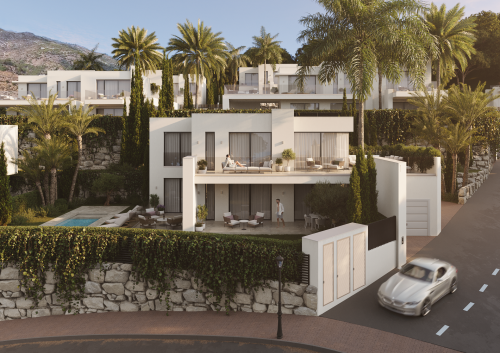
4 bedroom villa for sale in Mijas Pueblo, Mijas
- 4 beds
- 4 baths
- Plot: 580 m²
- Interior: 150 m²
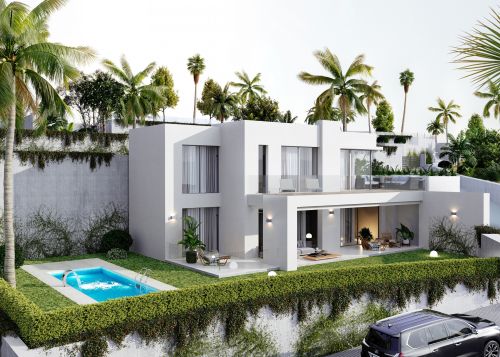
4 bedroom villa for sale in Mijas
- 4 beds
- 4 baths
- Plot: 580 m²
- Interior: 150 m²

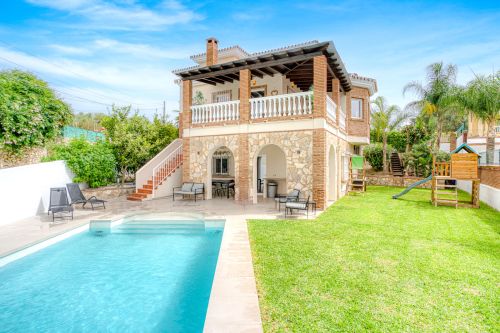
6 bedroom villa for sale in Mijas
- 6 beds
- 4 baths
- Plot: 658 m²
- Interior: 360 m²

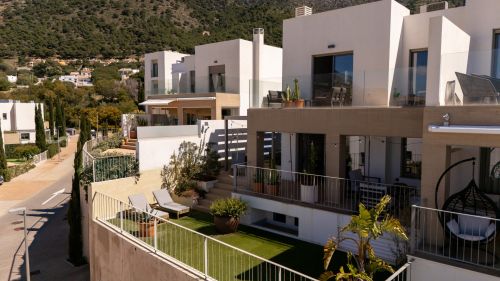
5 bedroom house for sale in Valtocado, Mijas
- 5 beds
- 4 baths
- Plot: 41,000 m²
- Interior: 378 m²
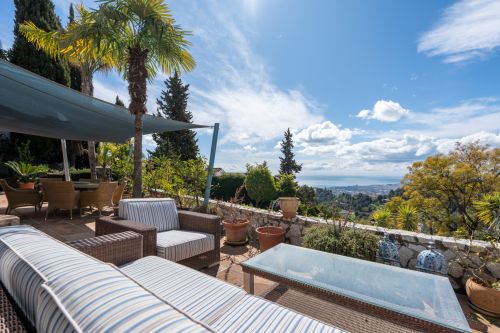
4 bedroom villa for sale in Mijas Pueblo, Mijas
- 4 beds
- 4 baths
- Plot: 1,974 m²
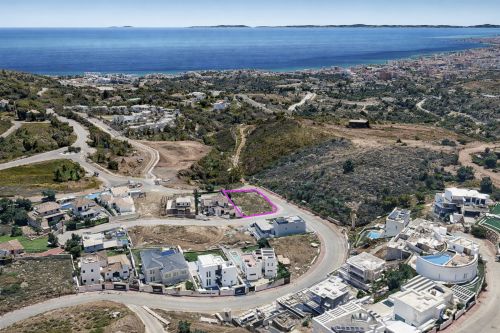
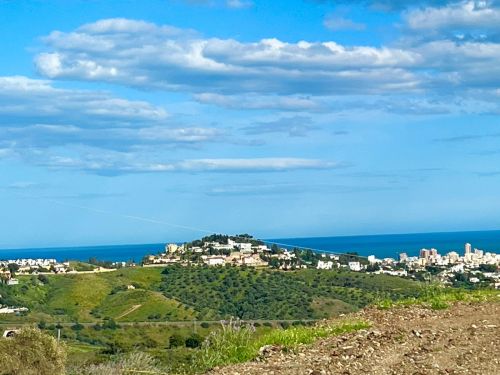
Plot for sale in Loma del Flamenco, Mijas
- Plot: 847 m²