Estepona has cut its property tax by 20% on average and set a 2026 municipal budget of €132 million, the second consecutive year the town has reduced the Estepona IBI charge. The council applied the reduction to 37,988 receipts and puts the saving to households at €6.1 million. It is the largest tax cut in the town’s history and it comes with a condition that decides whether it reaches you at all.
The 20% applies to people who are empadronados in Estepona, meaning registered as living in the municipality. A great many owners on this stretch of coast are not, and for them the Estepona IBI bill lands in 2026 looking much as it did in 2025. That distinction is the whole story for anyone buying here as a second home.
What the Estepona IBI cut actually is
IBI, the impuesto sobre bienes inmuebles, is the annual local property tax every owner in Spain pays to the municipality where the property sits. It is calculated by applying a municipal rate to the valor catastral, the administrative value the Catastro holds for the property, which is not the market value and is usually a good deal below it.
A town can move only one half of that equation. The valor catastral is set nationally on a revision cycle, so when a council announces a cut it is cutting its own rate. Estepona has done exactly that, and because the rate is the multiplier, a 20% reduction in the rate produces roughly a 20% reduction in the Estepona IBI bill for a property whose catastral value has not moved. The mechanism is simple and it is worth knowing, because it is also why a cut can be quietly undone by a revision.
The council has budgeted €6.6 million for the reduction and more than €7 million for tax relief in total across 2026, which includes a rubbish charge exemption applied to 1,812 receipts. Those are the town’s own published figures and they are unusually specific, which is generally a sign that a council expects to be held to them. We will check the figures again when the receipts land.
Who the Estepona IBI reduction actually reaches
The Estepona IBI reduction is targeted at empadronados. Registering on the padrón is a municipal population record rather than a tax residency declaration, but the two are connected in practice, and registering has consequences well beyond a property tax bill. It affects healthcare access, school places, some regional benefits and, in combination with days spent in the country, the question of where you are tax resident.
That makes it a decision rather than a form. An owner who already lives here most of the year is very likely registered and will see the cut automatically. An owner who spends eight weeks a year in the property, keeps their main home in another country and pays tax there is in a different position entirely, and the €200 or €300 a year at stake is rarely the deciding factor. The maths and the decision are not the same thing here.
This is the part we would rather talk through than see somebody act on from a headline. Tell us how you use the property and where you pay tax and we will tell you what the Estepona IBI change is actually worth to you, and what registering would and would not alter. Where it crosses into tax residency we bring in an adviser we work with rather than guess.

Zero debt is what made the Estepona IBI cut possible
Estepona reached what the council calls zero debt in 2025, and the 2026 accounts are the first in fifteen years with no provision for inherited debt. The figure being retired was more than €300 million, accumulated before the current administration, and servicing it consumed a share of every budget for over a decade.
Removing that line is what created the room for a tax cut and for more than €27 million of productive investment in the same year. A council with no debt service has genuine discretion, and Estepona has chosen to spend part of it on an Estepona IBI reduction that residents feel annually rather than on something more visible.
For an owner the useful read is not the politics of it but the durability. A tax cut funded by borrowing reverses within a cycle. A tax cut funded by the permanent removal of a debt service line has a much better chance of still being there in five years, which is the horizon most people buying in Estepona are working to.

Where the rest of the budget goes
The headline number is €132 million, of which more than €27 million is earmarked for productive investment. Estepona has spent the last decade putting that sort of money into the public realm, and the results are the reason the town reads differently now than it did in 2013, from the paseo and the port to the pedestrianised centre.
That matters to property values in a way a tax cut does not. A €250 saving is pleasant and forgettable. A promenade that keeps extending, streets that are maintained and a town centre people actually walk through are what has moved Estepona from a place buyers considered because it was cheaper than Marbella to a place they choose first.
The counterweight is honest to state. Estepona has also permitted a great deal of new housing over the same period, and a town that keeps adding stock competes with its own resale market. We track what is standing for sale across the whole coast every week, and Estepona is consistently one of the deeper markets on it. That is a buyer’s advantage and a seller’s problem, and it is the honest counterweight to a good news budget.
Estepona IBI against its neighbours
Every municipality sets its own rate, so the same property carries a different bill on either side of a boundary. The Estepona IBI cut widens a gap that already existed with parts of the coast to the east, and it does so at the moment the town is competing hardest for the same buyers as the Golden Mile and Benahavís.
The gap is real but it is small against the other numbers in a purchase. Transfer tax, notary and registry costs, and the difference between two asking prices all dwarf an annual municipal charge. Nobody sensibly chooses a town on IBI, and anybody presenting it as a reason to buy somewhere is reaching.
Where it does earn its place is in the running cost of ownership, alongside community fees, basura and insurance. That total is what determines whether a holiday home is comfortable to hold or quietly irritating, and it is the figure most buyers discover after they have committed rather than before.

What a lower Estepona IBI bill is worth on a real property
On a typical apartment the annual Estepona IBI charge runs to a few hundred euros, so a 20% cut returns something in the order of a good dinner rather than a holiday. Stated plainly like that it sounds trivial, and as a single year it is. Very few owners will notice it on the year it arrives.
The Estepona IBI saving stops being trivial when it is capitalised. A recurring annual saving on a property held for fifteen or twenty years is a real number, and for anyone letting the property it lands directly in net yield, where the difference between a 4.1% and a 4.3% return is the difference between two very different conversations with a lender.
We hold the cost of ownership data for the constructed developments across Estepona, built up over years, which means the community fee, the basura and the Estepona IBI band for comparable schemes rather than an average pulled off a portal. Set a specific property against that and you get a running cost you can actually budget to before you commit.

What happens to the Estepona IBI bill when a property changes hands
The charge for a given year is owed by whoever owned the property on the first of January, which means the seller carries the legal liability for the whole of the year a sale completes in. What almost always happens in practice is that the parties apportion it, so the buyer reimburses the seller for the part of the year they will own the property. That apportionment is a matter of contract rather than law, and it is negotiable like anything else in the deal.
It is a small number and it is worth getting right anyway, because it is a reliable indicator of how the rest of a transaction is being handled. A seller who has the receipt to hand, knows the band and has the community certificate ready is usually a seller whose paperwork will survive a lawyer looking at it. One who cannot produce a current bill rarely turns out to be organised about anything else.
We check the position on every purchase we act on, alongside the community fee, the basura and whether anything owing has attached to the property rather than the person. Unpaid municipal charges follow the property in Spain, which is the single most expensive thing a buyer can fail to look at, and it is our job rather than yours.
The Estepona IBI mistakes that are easy to make
The single most common error we see is an owner assuming the headline applies to them. The Estepona IBI reduction is conditional, it is applied to the receipt rather than claimed, and an owner who is not registered will simply receive an ordinary bill and assume the cut never happened. It did happen, it just was not aimed at them.
The second is treating the valor catastral as a market valuation, which it is not. An Estepona IBI bill can rise in a year the council cuts its rate.
The valor catastral is neither a market figure nor a fixed one. It is neither, and a property whose catastral value is due a revision can see its bill rise in a year the council cuts its rate. The two move independently and only one of them is in the town’s hands.
The third is buying on running costs without checking what has been done to the property. Estepona is a town of refurbished apartments, and the rules on what needs a licence have just moved next door in Marbella. Work carried out without the right paperwork is a resale problem long after it is a tax one.
If you are weighing a purchase here, the Estepona market report sets out where prices and supply actually sit, the Q1 2026 picture covers the wider coast, and the buyer’s guide walks through the costs that arrive with completion. If you already own here, our valuation calculator and the seller’s guide are the quickest way to see what the last two years have done to your position, and the current listings show what you would be competing with.
How much has Estepona cut IBI in 2026?
The Estepona IBI rate has come down by 20% on average, applied to 37,988 receipts, with the council putting the total saving to households at €6.1 million. It is the second consecutive annual reduction and the largest tax cut in the town’s history, funded from a 2026 budget of €132 million.
Does the Estepona IBI reduction apply to non residents?
No. The Estepona IBI reduction is for owners who are empadronados in Estepona, meaning registered as living in the municipality. An owner who is not registered receives an ordinary bill. Whether registering makes sense depends on how you use the property and where you pay tax.
What is IBI and how is it calculated in Spain?
Estepona IBI is the local version of the annual municipal property tax. It is worked out by applying the town’s rate to the valor catastral, the administrative value held by the Catastro, which is normally well below market value. The council sets the rate, the Catastro sets the value.
Why can Estepona afford to cut taxes?
Because it reached zero debt. The Estepona IBI cut is funded from that, and the 2026 accounts are the first in fifteen years with no provision for inherited debt of more than €300 million, which freed the room for both the reduction and over €27 million of investment in the same budget.
Is Estepona IBI cheaper than Marbella or Benahavís?
Every municipality sets its own rate, so bills differ across a boundary, and the Estepona IBI cut widens that gap. The difference is real but small next to purchase costs and asking prices. Ask us for the full running cost on a specific property and we will give you the comparison that actually matters.
The Costa del Sol property market continues to evolve, but informed decisions begin with reliable data. Download the JUST Q2 2026 Golden Triangle Market Report today and gain exclusive insight into one of Europe’s most resilient and internationally driven residential markets.

DOWNLOAD OUR Q2 2026 MARKET REPORT NOW
Free to read and free to quote, provided any figure is attributed to JUST Real Estate and names the edition it came from.
Research enquiries:
James Evans — Managing Partner
📞 +34 643 390 376 | ✉️ james@justrealestate.es
Sales enquiries:
Alina Nouaimeh — Partner
📞 +34 600 689 749 | ✉️ alina@justrealestate.es
FAQ
Is the JUST Market Report free to download?
Yes. The report is available as a complimentary download and provides professional analysis of the Marbella, Estepona and Benahávis property markets.
Who is the report designed for?
The report is written for buyers, sellers, investors, developers, relocation clients, family offices and anyone seeking accurate, data-led insight into the Costa del Sol property market.
Where does the data come from?
Our analysis uses official information from Registradores de España, INE, Notariado, Tinsa, Banco de España and other recognised industry sources, combined with our own market observations and research.
How often is the report updated?
JUST Real Estate publishes a comprehensive market report every quarter, ensuring readers have access to the latest available market intelligence.
Our latest listings
View our latest listings of luxury properties for sale, where sophistication and comfort come together for an exceptional living experience.

5 bedroom villa for sale in Mijas
- 5 beds
- 6 baths
- Plot: 1,805 m²
- Interior: 465 m²
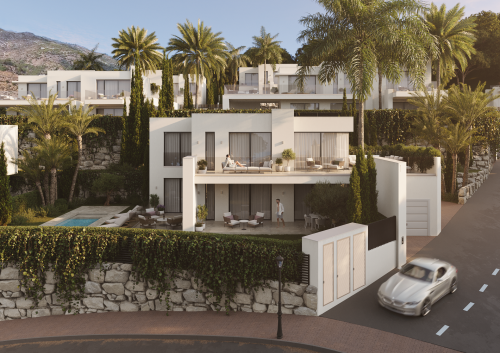
4 bedroom villa for sale in Mijas Pueblo, Mijas
- 4 beds
- 4 baths
- Plot: 580 m²
- Interior: 150 m²

4 bedroom villa for sale in Mijas
- 4 beds
- 4 baths
- Plot: 580 m²
- Interior: 150 m²

3 bedroom apartment for sale in Mijas
- 3 beds
- 2 baths
- Plot: 34.98 m²
- Interior: 79 m²

4 bedroom house for sale in Mijas Pueblo, Mijas
- 4 beds
- 3 baths
- Plot: 340 m²
- Interior: 186.8 m²

3 bedroom house for sale in Mijas Pueblo, Mijas
- 3 beds
- 2 baths
- Plot: 340 m²
- Interior: 164.82 m²

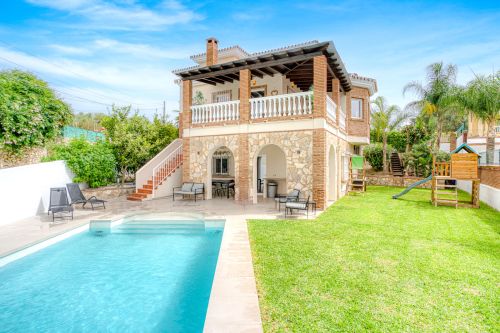
6 bedroom villa for sale in Mijas
- 6 beds
- 4 baths
- Plot: 658 m²
- Interior: 360 m²

5 bedroom house for sale in Valtocado, Mijas
- 5 beds
- 4 baths
- Plot: 41,000 m²
- Interior: 378 m²


4 bedroom villa for sale in Mijas Pueblo, Mijas
- 4 beds
- 4 baths
- Plot: 1,974 m²