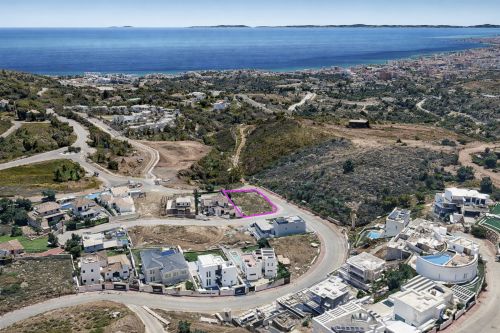
Benahavís
Benahavís has climbed from 56th to 2nd place on Spain’s ranking of municipalities by average gross income, according to the latest Agencia Tributaria data covering the 2024 tax year. Average income in the municipality rose from 43,159 euros in 2023 to 79,041 euros in 2024, an increase of 83.14 percent in a single year and one of the sharpest jumps recorded anywhere in the country’s income statistics.
Only Pozuelo de Alarcón, the wealthy Madrid suburb that has topped the national ranking for six consecutive years with an average of 92,564 euros, now sits above Benahavís. Pozuelo’s own figure rose a comparatively modest 5.17 percent over the same period, which only sharpens the contrast with the pace of change further south. For a municipality of just 9,472 residents tucked into the hills above the coast, that is a remarkable position to hold against towns many times its size, and it says plenty about who is choosing to call this corner of Málaga province home.
Anyone browsing the property for sale in Benahavís this autumn will recognise exactly why the figures moved so fast. A municipality built almost entirely around low density, high value residential schemes was always going to post an unusual income profile compared with a typical Spanish town, and the 2024 data confirms that profile has only become more pronounced over the past year.
The National Ranking
The Agencia Tributaria’s statistics cover every Spanish municipality with more than 1,000 inhabitants, excluding the Basque Country and Navarre, which report income separately under their own tax regimes. The figures are compiled from income tax returns submitted for the relevant year, which means the 2024 data reflects declarations filed and processed well into 2025 and only published in detail this autumn. Within that national dataset, the top ten is dominated by the usual suspects, four municipalities from the Madrid region and five from the province of Barcelona, leaving Benahavís as the only Andalusian entry anywhere near the summit.

Alcobendas in Madrid, Alella in Barcelona, Torrelodones in Madrid and Cambrils in Barcelona round out the remainder of the top ten, all places with long established reputations for concentrated private wealth built up over decades. Benahavís arriving in that company for the first time, and arriving in second place rather than tenth, marks a genuine change in how the Agencia Tributaria’s figures read for southern Spain rather than a marginal improvement.
Every one of those other nine municipalities sits within commuting distance of either Madrid or Barcelona, drawing on salaried executives, business owners and professionals who work in Spain’s two largest cities during the week. Benahavís has no equivalent commuter relationship with a major employment centre, which makes its presence in this company unusual on its own terms. Whatever is driving its income figures higher, it is not a short drive to a well paid office job.
What Is Driving The Jump
A jump of 83 percent in a single year rarely reflects a gradual rise in local salaries, and Benahavís is no exception. Tax officials and local sources quoted in the Spanish press have pointed to two overlapping forces, a wave of relocations by wealthy households from the Middle East amid regional instability there, and the continued build out of ultra luxury residential schemes that have drawn high net worth buyers to the municipality for years.
Sharp income swings of this kind in small municipalities tend to come from one of two sources, either a cluster of extraordinary one off events such as major property sales or inheritances, or a genuine and lasting shift in who is registered as resident for tax purposes. Benahavís appears to be experiencing a mix of both, with new high income residents registering locally even as existing ultra luxury schemes continue to change hands at substantial prices.
The timing lines up with a wider pattern across the Costa del Sol over the past two years, as instability in several Middle Eastern economies has pushed a steady stream of wealthy households toward southern Spain as a comparatively stable base. Marbella and its surrounding municipalities had already been drawing interest from Gulf buyers before this latest wave, but Benahavís, with its gated estates and well established reputation for privacy, appears to have captured a disproportionate share of the households actually registering as tax residents rather than simply buying a holiday home.
It would be a mistake to treat this purely as a one year phenomenon. Residential schemes of the scale found in Benahavís take years to sell out, and buyers who relocate their tax residence tend to stay registered for the long term rather than moving on after a single tax year. If even a portion of this year’s new arrivals remain in place, the municipality’s elevated position in the national ranking looks more durable than a single extraordinary data point might otherwise suggest.
La Zagaleta, La Quinta And Montemayor
Three names explain much of Benahavís’s reputation among the wealthiest buyers in Europe. La Zagaleta, a gated estate spread across roughly 900 hectares with two private golf courses, its own equestrian club and a helipad, caps its membership at around 420 plots and has long been considered one of the most exclusive residential addresses on the continent. Villas there typically trade from around 3 million euros up to 40 million euros, with the very best positioned plots reaching figures per square metre that few other parts of Spain can match.
The estate’s model, strict plot limits, round the clock security and a private members club at its centre, has been widely copied elsewhere on the coast since it was first established, but rarely matched for scale or for the length of waiting list behind it. Membership of the kind La Zagaleta offers has become almost as much a status marker among its target buyers as the villas themselves, which helps explain why demand has stayed resilient even as broader economic conditions elsewhere have wobbled.
La Quinta and Montemayor sit alongside La Zagaleta as the municipality’s other flagship urbanisations, each built around golf, security and privacy rather than proximity to the beach. Our Benahavís property market report tracks pricing across all three in detail each quarter, and the common thread running through them is a buyer profile that is far less sensitive to the broader Spanish economy than the typical resale buyer elsewhere on the coast.

What unites all three urbanisations is scarcity by design. Plot numbers in each scheme were capped decades ago, long before current demand levels were ever anticipated, and no amount of fresh capital arriving in the municipality can conjure additional land within their boundaries. That fixed supply is precisely why income and price figures in Benahavís can move so sharply in response to a relatively small number of new, very wealthy households, since those households are bidding for a pool of properties that simply cannot expand to meet them.
A Small Population, A Big Average
It is worth being honest about how averages like these behave in a municipality as small as Benahavís. With only 9,472 residents on the padrón, a relatively modest number of very high earners can move the average income figure dramatically in a way that would be almost impossible in a city of several hundred thousand people. That does not make the Agencia Tributaria’s figures wrong, but it does mean a single average tells only part of the story.
The more useful figure sits alongside the headline number. Benahavís’s mean disposable income, calculated after tax, rose from 33,539 euros in 2023 to 59,730 euros in 2024, a jump that is almost as dramatic as the gross figure and confirms the shift is not simply an accounting quirk tied to one unusual declaration. A typical household in Benahavís is, by any reasonable measure, considerably better off than it was only a year earlier.
Statisticians usually prefer a median figure over an average precisely because a handful of very high earners can distort the picture in a small population, and the Agencia Tributaria’s municipal data is built on averages rather than medians. That caveat does not undo the story here, since both the gross and disposable income measures moved in the same direction by a similar magnitude, but it is worth keeping in mind before assuming every household in Benahavís experienced an identical improvement in its finances.
None of this is a criticism of the data, which remains the most reliable public source available for comparing household finances across Spanish municipalities. It is simply a reminder that a town built around a small number of extremely high value estates will always produce statistics that need a little more context than a town of comparable population built on more typical housing. Context, rather than scepticism, is the right response to a figure this striking.

The Knock On Effect On Property
Income data of this kind rarely moves in isolation from property prices, and Benahavís has already shown signs of the connection in our own reporting. House prices across the municipality reached a notable milestone earlier this year, covered in our piece on Benahavís house prices and the 5,550 euro per square metre figure, a level that places the municipality among the most expensive in Spain on a pure price per square metre basis.
A municipality attracting this concentration of high income residents tends to see knock on demand across its wider property market, not only within the gated estates themselves. Restaurants, private schools and service businesses catering to residents of La Zagaleta, La Quinta and Montemayor all draw staff and suppliers who, in turn, look for housing nearby, a pattern our coverage of the Costa del Sol’s luxury property market has followed closely across the wider Golden Triangle.
That secondary demand tends to show up first in smaller, more accessible developments on the edges of Benahavís rather than within the flagship estates themselves, where supply is effectively fixed. Buyers priced out of La Zagaleta but drawn to the same lifestyle and schools have increasingly looked at these surrounding pockets instead, a trend that has quietly lifted values across the municipality well beyond its three best known addresses.
Some of that spillover demand lands just across the municipal boundary too. Neighbouring Estepona, whose own property market report we track alongside Benahavís and Marbella, has absorbed a share of buyers who want proximity to Benahavís’s schools and golf courses without competing directly for its scarcest addresses.

Benahavís In The Regional Context
Zoom out to Andalucía as a whole and the contrast becomes sharper still. Average gross income across the region rose 5.5 percent to 27,497 euros in 2024, a solid but unremarkable increase compared with the swing recorded in Benahavís alone. At the opposite end of the regional scale, Guadalhortuna in Granada province recorded the lowest average income in Andalucía at just 14,514 euros, leaving a gap of 64,527 euros between the region’s richest and poorest municipalities.
That gap says as much about Spain’s uneven geography of wealth as it does about Benahavís specifically. Sixteen of the twenty highest earning municipalities nationally recorded income growth above the regional average of 5.5 percent last year, suggesting the pattern at the very top of the income scale is accelerating faster than the national or regional picture overall. Wealth, in other words, appears to be concentrating further in the places that already held it, with Benahavís simply posting the most dramatic single example of a trend playing out more quietly elsewhere.
Our guide to Benahavís sets out why this particular stretch of hillside, within easy reach of both Marbella and Estepona yet distinct from both, has become such a magnet for this kind of capital. Its microclimate in the hills and the privacy its topography naturally affords both play a part in that story.
Our Golden Triangle market report places these income figures alongside the sales data that ties Benahavís, Marbella and Estepona together as a single, increasingly wealthy, property market. For buyers weighing up where that capital is likely to flow next, our team can help narrow down what you are actually looking for across all three municipalities rather than treating each in isolation.

Market report
Download our Q1 2026 Market Report
The Costa del Sol property market continues to evolve, but informed decisions begin with reliable data. Download the JUST Q1 2026 Marbella Property Market Report and gain exclusive insight into one of Europe’s most resilient and internationally driven residential markets.
Research enquiries
James Evans
Sales enquiries
Alina Nouaimeh
Questions
About the report
Is the JUST Market Report free to download?
Yes. The report is available as a complimentary download and provides professional analysis of the Marbella, Estepona and Benahavís property markets.
Who is the report designed for?
The report is written for buyers, sellers, investors, developers, relocation clients, family offices and anyone seeking accurate, data-led insight into the Costa del Sol property market.
Where does the data come from?
Our analysis uses official information from Registradores de España, INE, Notariado, Tinsa, Banco de España and other recognised industry sources, combined with our own market observations and research.
How often is the report updated?
JUST Real Estate publishes a comprehensive market report every quarter, ensuring readers have access to the latest available market intelligence.
Listings
Our latest listings
A selection from our current listings, with the full range on our properties page.
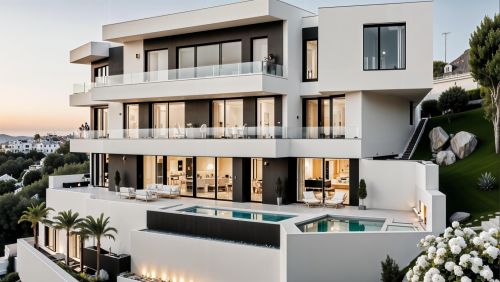
5 bedroom villa for sale in Mijas
- 5 beds
- 6 baths
- Plot: 1,805 m²
- Interior: 465 m²
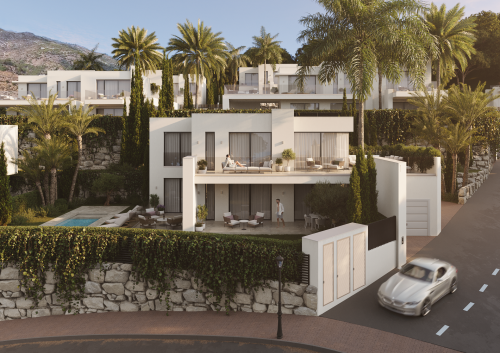
4 bedroom villa for sale in Mijas Pueblo, Mijas
- 4 beds
- 4 baths
- Plot: 580 m²
- Interior: 150 m²
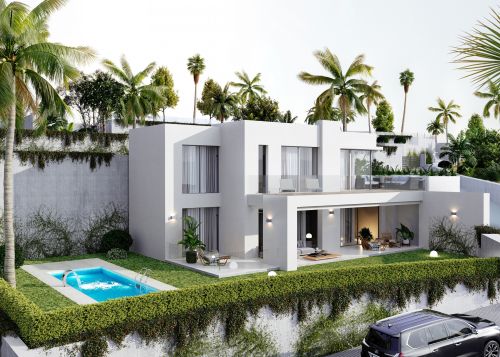
4 bedroom villa for sale in Mijas
- 4 beds
- 4 baths
- Plot: 580 m²
- Interior: 150 m²
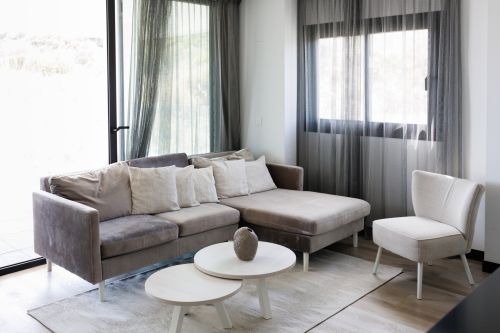
3 bedroom apartment for sale in Mijas
- 3 beds
- 2 baths
- Plot: 34.98 m²
- Interior: 79 m²
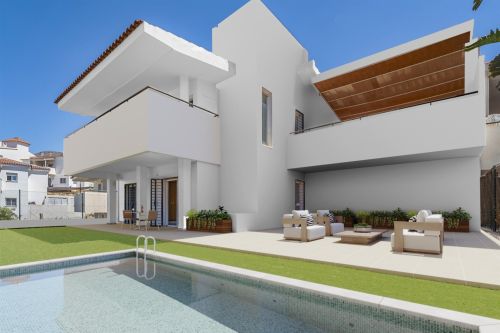
4 bedroom house for sale in Mijas Pueblo, Mijas
- 4 beds
- 3 baths
- Plot: 340 m²
- Interior: 186.8 m²
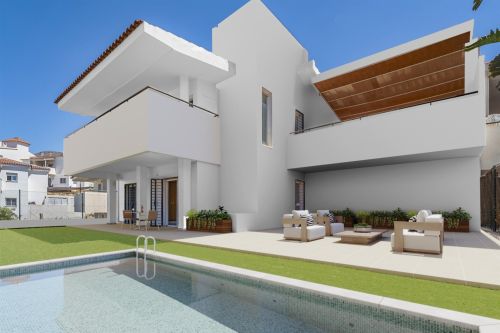
3 bedroom house for sale in Mijas Pueblo, Mijas
- 3 beds
- 2 baths
- Plot: 340 m²
- Interior: 164.82 m²

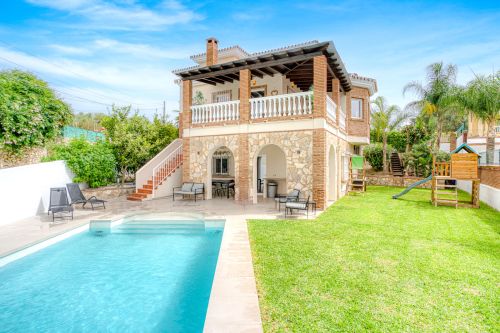
6 bedroom villa for sale in Mijas
- 6 beds
- 4 baths
- Plot: 658 m²
- Interior: 360 m²
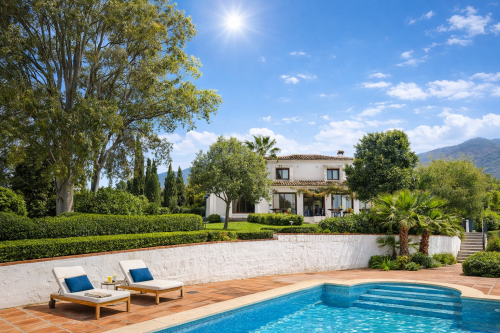
5 bedroom house for sale in Valtocado, Mijas
- 5 beds
- 4 baths
- Plot: 41,000 m²
- Interior: 378 m²
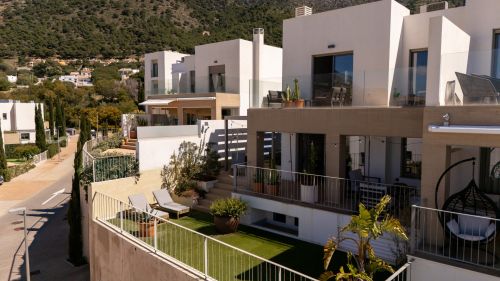
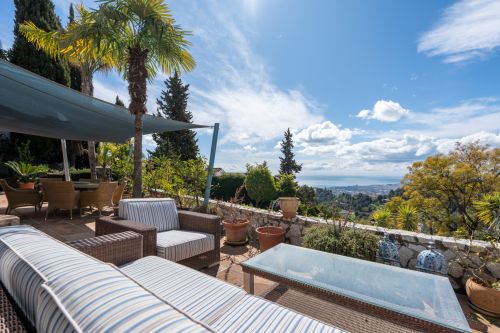
4 bedroom villa for sale in Mijas Pueblo, Mijas
- 4 beds
- 4 baths
- Plot: 1,974 m²