Marbella PGOM land has been read against a plan in force since Saturday 14 November 2026, and the documents published with it settle the question owners of land have been asking since September, which is where the city is allowed to grow. The answer runs through 11,714 hectares, two classes of land and a list of named areas, and it is more specific than any coverage of the vote. Anyone weighing plots for sale in Marbella can now set a plot against the plan’s own maps rather than against a forecast.
We have read the Memoria de Ordenación, the Normas Urbanísticas and the executive summary in full, around 240,000 words, alongside the council’s planning sheets. Our earlier pieces covered the entry into force through BOPMA No. 219, the vote and the 53 million square metres of urban land and the five changes on day one, so this piece stays with the land itself, area by area.
The Marbella PGOM land map in 11,714 hectares
The Marbella PGOM land classification divides the whole municipality into urban land and rustic land, the only two classes the LISTA, the Andalusian planning law of 2021, still recognises. Urban land covers 5,310 hectares. Rustic land takes the rest, split into specially protected land at 1,652 hectares, land preserved for planning reasons at 1,534, land preserved for flood risk at 167 and common rustic land at 2,956 hectares.

Common rustic land is the figure a landowner should look at first, because it is the only Marbella PGOM land on which new urban development can be proposed. The largest share lies in the hills of the east, between Río Real and Cabopino, with further tracts north of San Pedro Alcántara, either side of the Guadaiza and above Nueva Andalucía. The protected land holds Sierra Blanca, the river corridors of the Guadalmina, the Guadaiza, Río Verde and Río Real, and the dunes at Artola.
The new map also moves the line of the municipality itself, because when the regional government re-surveyed Marbella’s historic boundary of 1873 in 2018, built up land developed by Benahavís and Mijas turned out to sit inside Marbella, and the plan now classifies it as Marbella urban land. The areas it names are Horno de la Miera, parts of El Herrojo and La Quinta, Guadaiza B, Vega del Jaque and part of an urban area of Mijas.
Sectors of the 1986 plan returned to rustic land
The 1986 plan held a third class of land, urbanizable land, set aside for building in the future. The LISTA abolished that class, and every plot zoned that way had to be placed in one of the two remaining classes on its own merits. Land that met the test for urban land in article 13 of the law, broadly land already transformed and served, became urban, and the rest became rustic.
The executive summary lists the 1986 sectors affected in whole or in part. They include URP-NG-1, 5, 8, 20 and 21 in Nagüeles, URP-SP-1, 2, 9, 15, 16 and 19 in San Pedro Alcántara, URP-AN-2 in Nueva Andalucía, URP-RR-5 in Río Real, URP-VB-6 in La Víbora and URP-MB-2 and 7 in central Marbella. Several areas of unprogrammed land join them, among them Marbería, Bajos de Huerta del Prado and El Realejo.
Several of those names reappear further down, because a sector classed as rustic keeps an approved plan, or a plan already in process, under the transitional rules. The executive summary also states that no Marbella PGOM land has had licences or planning procedures suspended. For an owner whose sector has gone back to rustic land with no plan in process, the route to building now runs through a new partial plan on common rustic land.
How Marbella PGOM land becomes building land
The plan itself delimits no new urban development on rustic land, and the Memoria de Ordenación says so in four separate places. The council weighed five alternatives, from keeping the 1986 plan to releasing all unprotected land, and chose to regenerate the existing city first. New growth is left to be proposed later through partial plans, when a general interest justifies it.
Those partial plans can only be drawn on the common rustic class of Marbella PGOM land. The promoter pays the council 10% of the average buildable value of the area, in cash or in built floor space, and carries the full cost of roads, services and the links to the networks outside. The plan adds a planting rule of one tree for every home or every 100 m² of buildable space, and every future development has to show a positive balance for the town hall.
What the plan does do is name the places it regards as suited to growth. In San Pedro Alcántara these are Camino de la Granadilla and El Potril, and in Nueva Andalucía Guadaiza Oriental, Holanducía and El Rodeo. Nagüeles has the Cinturón de Nagüeles, Viña Marfil and La Caridad, central Marbella has Arroyo Segundo, the Ciudad de la Justicia with a business park, Chorraero and La Ermita, and Las Chapas has Arroyo Sequillo, Cabopino, Santa María and Arroyo Alicate.
In the east a strip of common rustic land between the AP-7 and the preserved hills is held back for strategic projects, and the plan describes land at Arroyo Las Cañas, ringed by urban land on every side but the north, as suited to a future extension of the city. The eastern growth areas we reported on in September sit inside this framework, and the partial plans that follow will fix their final home counts.
Owners of common rustic land in these areas hold the ground the next decade of Marbella will be built on, and its value now turns on where it sits against the plan’s maps. We hold cadastral and planning records across the municipality, built up over many years, and setting a plot against the new plan is the first exercise we run for any landowner who asks us.
The JUST Intelligence Database™ holds closed sales, planning records and land data across Marbella, built up over many years and held by no other agency. We set any plot or home against the new plan and tell you exactly where it stands.
The 1986 projects the Marbella PGOM carries over
The transitional rules keep the development plans approved under the 1986 framework and set deadlines for the ones still on their way. On urban land the approved schemes being completed are Ensanche Este II and III in San Pedro Alcántara, El Pinar I in Río Real, El Barronal at El Alicate, Elviria IV and V, and the modification at Las Dunas. Zona Sur I in San Pedro, La Judía in Nueva Andalucía, Los Verdiales and a plot beside exit 175 of the A-7 may continue to definitive approval.

On rustic land the plan keeps four approved schemes, Cerro del Espartal, Tenis de Marbella, Lomas del Tenis and the second phase of Golf Río Real. Arroyo de la Cruz, Cortijo Alto and the Marbería sectorisation plan, whose environmental procedures had started, have five years to reach definitive approval. Las Monjas, Siete Revueltas and El Realejo, which already held initial approval, have three.
A home in one of these schemes is bought into a plan that the new PGOM has confirmed by name, and the deadlines give the pending ones a clear calendar. Our guide to buying off plan covers how stage payments and bank guarantees protect a buyer of the new build they bring.
Vacant plots and denser service zones in the existing city
On urban Marbella PGOM land the plan identifies vacant plots that never received a detailed plan and sends each one to an internal reform. It names arroyo del Chopo in San Pedro Alcántara, Holanducía north of the A-7 at Puerto Banús, Viña Marfil north of the Istán road, the land between La Capellanía and El Batatal, the Starlite car park beside Parque Nagüeles, the 1986 sector URP-NG-13 and a plot north of the A-7 at Las Dunas. On these plots the share of protected housing can be matched to the real demand recorded in the municipal housing plan.
Service and activity zones are marked as the right places for more density, and the plan names Guadalmina, the Ricardo Soriano axis, La Cañada, Carib Playa, La Carolina and the streets around Puerto Banús. The garden city urbanisations, which hold most of the villas in Nueva Andalucía and on the Golden Mile, keep their present density, and the plan rules out volumes that would change their character.

Three groups of rural homes become urban land in the same move, and the largest, covering north San Pedro, Valle del Sol, Las Medranas, Fuente del Espanto and El Salto, holds 259 homes on about 129 hectares, with La Cañada at 24 homes on just over 9 hectares and the north of Bello Horizonte at 32 homes on about 7 hectares. The POU, the detailed plan still to come, is charged with bringing them services and public facilities, which settles a long uncertainty for owners in the hills above San Pedro Alcántara.
A house on Marbella PGOM land classed as rustic
Article 4.4.13 of the Normas Urbanísticas allows a detached house on rustic land with no farm attached, as an extraordinary use. The plot must measure at least 2.5 hectares, or 5 hectares where it includes forest land, and must hold a circle of 50 metres radius. The house may occupy no more than 1% of the plot and build no more than 1% of its area, with 25 metres to every boundary.
It must stand more than 200 metres from urban land and from any irregular cluster of buildings, and its water and power should come preferably from its own renewable supply, with a grid connection allowed by exception. Each one needs the council’s prior authorisation and a compensatory payment. On Marbella PGOM land a house of this kind fits the natural conservation, rural development and urban edge zones of the rustic map and stays out of the areas of priority environmental value.

The plan counts eleven irregular clusters of buildings on rustic land, and of those El Potril, on the right bank of the Guadaiza, and the cluster on the Istán road are marked to join the town through a new urban development, Los Molineros can follow a separate route, and the rest stay rustic with the option of a special plan to improve their services. Anyone who has looked at building a house in Andalucía now has a precise benchmark for Marbella, and a finca of 2.5 hectares has a value in this municipality it did not carry a week ago.
Rail stations, the A-7 third lane and twelve new parks
The plan reserves seven possible stations for a coastal railway, at Cabopino, Elviria, the Hospital, the Palacio de Congresos, Holanducía and Puerto Banús, San Pedro Alcántara and La Bajadilla, on a route the state is still studying that would probably run underground. On the roads it lists a third lane on the A-7 between Puerto Banús and San Pedro, which it calls the main black spot on the network, a full AP-7 junction at the Hospital Costa del Sol and a semi pedestrian Ricardo Soriano.
Twelve new general parks are proposed, among them Parque Guadaiza Sur at just over 9 hectares, a park at Elviria and the Parque de las Dunas, and ten existing parks grow, led by Lago de las Tortugas in Nueva Andalucía. The target is 10.04 m² of general green space per resident, against 9.68 today. The list of facilities adds a Ciudad del Deporte north of La Ermita, the Ciudad de la Justicia at La Torrecilla and a rebuilt municipal stadium.

Water is planned on the same scale, and the Memoria records the rebuild of the Marbella desalination plant at €39.25 million before 2028, two new supply mains at €27.3 million and €33.4 million, €78 million of collectors for the Arroyo de la Víbora sector and the raising of La Concepción dam at €210 million on a horizon of 2039. Growth is tied to those networks, so new homes arrive with the water and drainage to serve them.
Details from a plan that runs to 104 published pages
One of the seventeen listed monuments in the catalogue, the Torre del Mar, carries a note that its location is unknown. The oldest declaration covers the ruins of San Pedro Alcántara, listed in the Gaceta of 3 June 1931, and the catalogue adds three underwater archaeological zones off Puerto Banús, the mouth of the Guadalmina and El Placer de las Bóvedas.
Elviria was planned in 1960 for almost 30,000 people and is home to about 10,000, much of it in Las Chapas. Coastline makes up 42% of the municipal boundary, close to 27 kilometres of it, and the plan records that the Marbella Club pier echoes an old iron ore jetty that was once the only berth between Málaga and Algeciras. Demolishing an old building now requires a wildlife survey, carried out only between mid March and the end of April or between early August and mid October.
We read every plot and home a client considers against the Marbella PGOM land classes and the 1986 detailed rules together. Owners can start with a figure from our valuation calculator, our guide to the Marbella PGOM carries the full background, and the Marbella property market report tracks how supply and prices respond as the new land comes forward.
Five searches on Marbella PGOM land
Where can new building land come from under the Marbella PGOM?
Only from common rustic land, which covers 2,956 hectares of Marbella PGOM land. The plan itself delimits no new urban development; it lets partial plans propose it later, with 10% of the average buildable value going to the council and every service paid by the promoter.
Which 1986 sectors went back to rustic land in Marbella?
The executive summary lists sectors in Nagüeles, San Pedro Alcántara, Nueva Andalucía, Río Real, La Víbora and central Marbella, plus unprogrammed land such as Marbería and El Realejo. Some keep an approved plan or a plan in process under the transitional rules. Ask us and we will tell you where a specific plot stands.
Can you build a house on rustic land in Marbella?
Yes, under article 4.4.13. The plot must be at least 2.5 hectares, or 5 with forest land, the house may build 1% of the plot, it must keep 25 metres to every boundary and stand more than 200 metres from urban land, with council authorisation and a compensatory payment.
Which areas does the Marbella PGOM name for future growth?
Camino de la Granadilla and El Potril in San Pedro, Guadaiza Oriental, Holanducía and El Rodeo in Nueva Andalucía, the Cinturón de Nagüeles, Viña Marfil and La Caridad, Arroyo Segundo, Chorraero and La Ermita in Marbella, and Arroyo Sequillo, Cabopino, Santa María and Arroyo Alicate in Las Chapas.
How much of Marbella is urban land under the new plan?
Urban land covers 5,310 of the 11,714 hectares of Marbella PGOM land. Rustic land takes the rest, including 2,956 hectares of common rustic land, the only class on which new development can be proposed.

Market report
Download our Q2 2026 Market Report
The Costa del Sol property market continues to evolve, but informed decisions begin with reliable data. Download the JUST Q2 2026 Marbella Property Market Report and gain exclusive insight into one of Europe’s most resilient and internationally driven residential markets.
Research enquiries
James Evans
Sales enquiries
Alina Nouaimeh
Questions
About the report
Is the JUST Market Report free to download?
Yes. The report is available as a complimentary download and provides professional analysis of the Marbella, Estepona and Benahavís property markets.
Who is the report designed for?
The report is written for buyers, sellers, investors, developers, relocation clients, family offices and anyone seeking accurate, data-led insight into the Costa del Sol property market.
Where does the data come from?
Our analysis uses official information from Registradores de España, INE, Notariado, Tinsa, Banco de España and other recognised industry sources, combined with our own market observations and research.
How often is the report updated?
JUST Real Estate publishes a comprehensive market report every quarter, ensuring readers have access to the latest available market intelligence.
Listings
Our latest listings
A selection from our current listings, with the full range on our properties page.
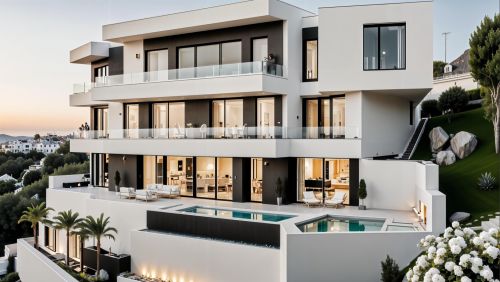
5 bedroom villa for sale in Mijas
- 5 beds
- 6 baths
- Plot: 1,805 m²
- Interior: 465 m²
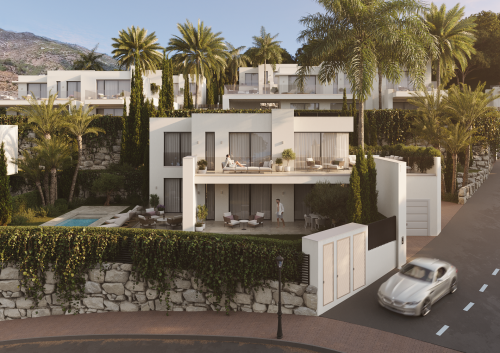
4 bedroom villa for sale in Mijas Pueblo, Mijas
- 4 beds
- 4 baths
- Plot: 580 m²
- Interior: 150 m²
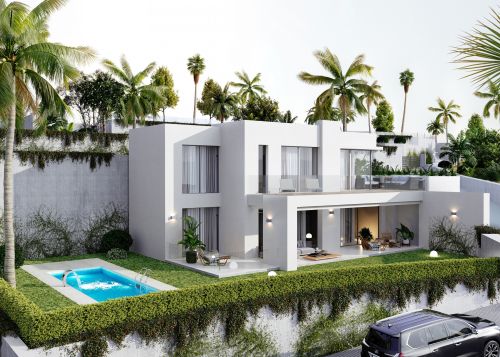
4 bedroom villa for sale in Mijas
- 4 beds
- 4 baths
- Plot: 580 m²
- Interior: 150 m²
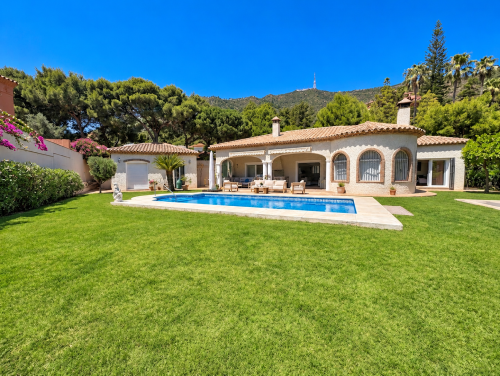
3 bedroom villa for sale in Mijas
- 3 beds
- 3 baths
- Plot: 776 m²
- Interior: 127 m²
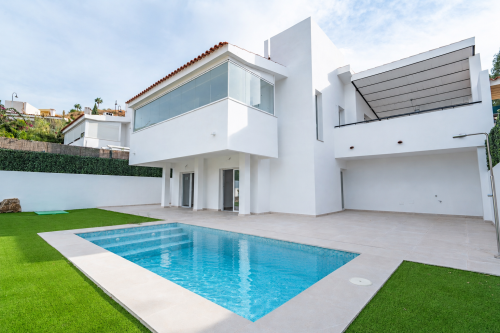
4 bedroom villa for sale in Mijas
- 4 beds
- 3 baths
- Plot: 340 m²
- Interior: 187.42 m²
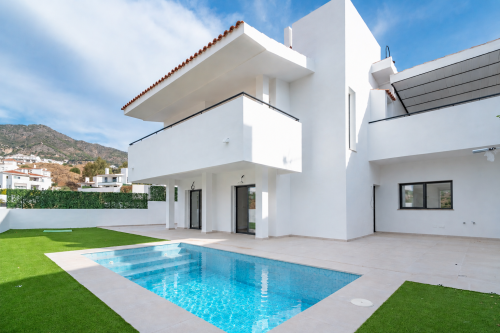
4 bedroom villa for sale in Mijas
- 4 beds
- 3 baths
- Plot: 339 m²
- Interior: 195.47 m²
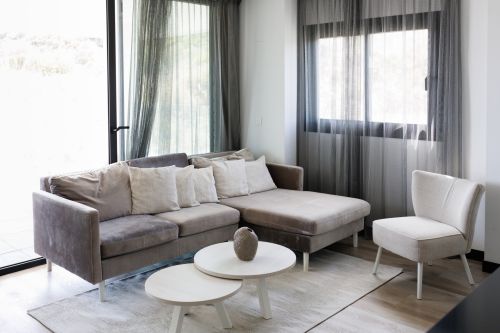
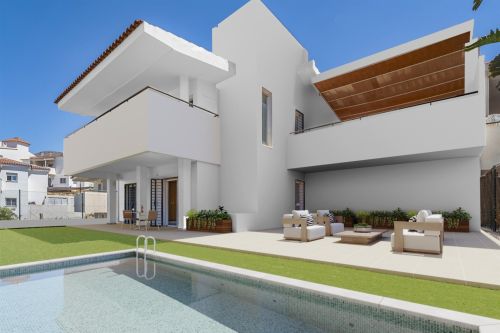
3 bedroom villa for sale in Mijas
- 3 beds
- 2 baths
- Plot: 344 m²
- Interior: 164.86 m²

6 bedroom villa for sale in Mijas
- 6 beds
- 4 baths
- Plot: 658 m²
- Interior: 360 m²
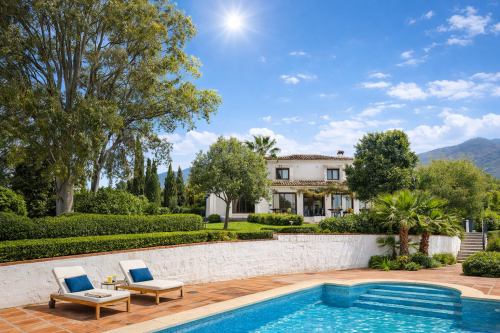
5 bedroom house for sale in Valtocado, Mijas
- 5 beds
- 4 baths
- Plot: 41,000 m²
- Interior: 378 m²
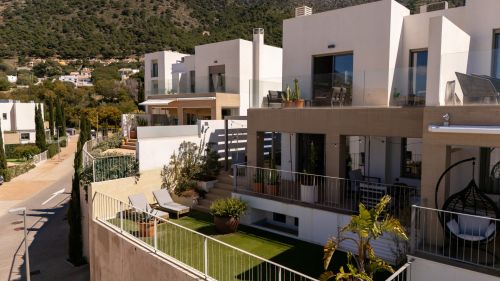
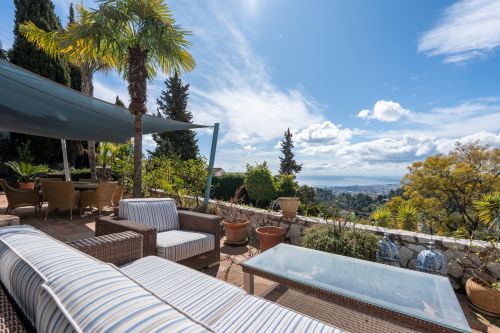
4 bedroom villa for sale in Mijas Pueblo, Mijas
- 4 beds
- 4 baths
- Plot: 1,974 m²