

Area guide · The golf at Marbella’s western end
Property for Sale in Guadalmina
Four hundred hectares of sugar cane and maize became a golf course in 1959, and the houses were fitted in between the fairways afterwards. Sixty seven years on the streets are still numbered rather than named.
in Guadalmina today
for a villa here
Nothing in Marbella is older
Puerto Banús, twenty west to Estepona
The place
Where Marbella stops and the river decides it
Guadalmina is the western end of Marbella, immediately west of San Pedro de Alcántara and hard against the river that separates the municipality from Estepona. It comes in two halves. Guadalmina Baja lies between the coast road and the sea, with the beach, the Roman baths and the older golf holes on it. Guadalmina Alta is on the mountain side of the same road, around the second course and the commercial centre.
It was not laid out as an estate and then given a golf course. The land was a working farm of four hundred hectares, bought from a sugar company in 1933 and planted with maize and cane, and the golf came out of it in 1959. The houses were the last thing to arrive, sold with the course as their garden, which was the whole idea from the beginning.
This guide sets out how it came to be, what the street register says about it, what living at this end of the coast is actually like, and what the numbers say, including the running costs no official body publishes and we hold ourselves.

Guadalmina Alta from the air. Big plots, low white houses, tiled roofs and the umbrella pines that were on the farm before the houses were.
Where exactly it is
Two halves, one coast road
The western end of Marbella read along the shore, from the mouth of the Guadalmina east to San Pedro de Alcántara. The A-7 runs across the frame and divides the two halves: Guadalmina Baja between the road and the sea, with the beach and the older golf holes on it, Guadalmina Alta on the mountain side around the North Course. Puerto Banús is ten minutes further east, off the frame.

- 1Guadalmina BajaBetween the coast road and the sea, with the beach and the older golf holes
- 2Guadalmina AltaThe mountain side of the same road, the North Course and the shops
- 3Guadalmina golfTwo eighteen hole courses, the South opened 1959
- 4Las BóvedasRoman baths and a watchtower on the beach, listed in 1936
- 5Vega del Mar basilicaA late Roman church and its burial ground, listed in 1931
- 6San Pedro de AlcántaraFive minutes east, the town this postcode belongs to
Orthophoto PNOA © Instituto Geográfico Nacional de España. Rotated so the area reads across the frame; the north mark keeps it honest. Pins mark the centre of each place, not a boundary.
There was a farm here
Irrigated fields and a river mouth, then a course, then a neighbourhood
The same frame of coast, flown twice, seventy years apart. In 1956 it is a working farm of maize and sugar cane with a river running through it. The golf arrives at the end of that decade and the houses are fitted in between the fairways afterwards.


Nothing was added to these frames and nothing was moved. The only thing that changes is how much of the ground is spoken for. Historic and current imagery © Instituto Geográfico Nacional de España, both rendered through one frame at one scale.
How it came to be
A farm, then a golf course, and the houses last of all
The oldest things here are on the beach. About a kilometre east of the river mouth, on the sand at Guadalmina Baja, stand the Roman baths of Las Bóvedas, an octagonal hall of the late Empire that still carries part of its vault and both its storeys, with fish salting tanks around it and a sixteenth century watchtower above. Five hundred metres north east, among the eucalyptus, is the Vega del Mar basilica, three naves with an apse at each end and a font cut from a single stone, with a burial ground of some two hundred graves around it. The remains are big enough that the Junta’s own record treats them as a possible Roman town rather than a villa. Both sites were listed before any of this was built: the basilica in 1931 and the baths in 1936.
For everything after that the story starts in 1933, when Norberto Goizueta Díaz bought the Hacienda Guadalmina from the sugar company that had been breaking up San Pedro’s old agricultural colony since 1910. He got four hundred hectares of irrigated land, running from the Cancelada reservoir down to the sea and from the Guadalmina river across to the arroyo del Chopo. Those two watercourses are still the edges of the neighbourhood today. He built a cortijo and a long low house on the shoreline in a Californian colonial idiom, with a library of forty thousand volumes and a fifteenth century well carried off from the Seville exposition of 1929, and he farmed maize and sugar cane on the rest of it for twenty years.
In the late fifties he sent for Javier Arana, the Basque architect whose Spanish courses have a monograph of their own, and the letter he wrote him is the most useful document in this guide. The site, he said, was bounded by the Mediterranean to the south and the estate to the north, and what he wanted was to build houses inside the golf, in the manner of Chiberta and the best courses in Los Angeles, sold finished on very little land but with the course itself as their park. That sentence is the origin of an idea that has since been built the length of this coast, and it was written here first.
Arana’s nine holes opened in 1959. The first tee stood beside the Hotel Guadalmina on the beach, a par three that was a tee, a green and nothing but sand in between, and the round was played twice round to a par of seventy four. There was a par six on it called Tipperary. A second nine followed in the sixties, laid out on the northern part of the estate beside the river, and the plan sent to Arana for it put seven of the new holes in a circle so that houses could be sold both inside and outside the ring. Nobody has renumbered them since; today’s sixth to fourteenth are Arana’s original nine.
The rest arrived in order. A second course, the North, was cut into the higher ground in the seventies by Folco Nardi, an Italian cavalry colonel who had worked as Goizueta’s foreman and greenkeeper, and it is shaped by the arroyo del Chopo, which crosses five of its holes. A clubhouse went up to a design by Luis Gutiérrez Soto, the Madrid architect of Barajas airport, who was elected to the Real Academia de Bellas Artes de San Fernando the year before the golf opened. The South Course was rebuilt in 2002 with the Arana routing left alone. The order of events is still legible on the ground, and it is the reason the houses sit where they sit.

One of the older houses, white walls and a tiled roof under an umbrella pine. The instruction to the architect was to sell houses finished on very little land, with the course as their park.
The Roman baths on the sand and the basilica just inland of them were protected long before the coast was built on.
Javier Arana’s South Course, with houses planned between the fairways from the first drawing.
Living here
Built for February as well as August
The schools are the reason a lot of families look here first. Colegio San José has its Marbella campus inside Guadalmina itself, a private bilingual school running from infantil right through to bachillerato and offering the International Baccalaureate Middle Years and Diploma programmes, so the school run can be a walk rather than a drive. Laude San Pedro International College is a few minutes east at Nueva Alcántara, taking children from two and a half to eighteen on both British and Spanish curricula. Having a serious choice of both systems within five minutes is unusual at this end of the coast.
Healthcare is split the way it is everywhere in Marbella, between a close public service and a short drive to private cover. The Centro de Salud de San Pedro de Alcántara is about five minutes east and there is a pharmacy on the coast road at the Guadalmina commercial centre. The private hospitals are concentrated around Marbella town and Puerto Banús, fifteen minutes or so east, and the public hospital for the whole western Costa del Sol is on the A-7 the other side of Marbella. Nothing here is far, but the good stuff is east of you rather than west.
Getting about is a coast road life with a genuine advantage. Guadalmina sits at the point where the A-7 is still moving, so San Pedro is about five minutes and Puerto Banús about ten, and Estepona is about twenty in the other direction, all of them reached without going through Marbella. Málaga airport and Gibraltar are about an hour each, one east and one west, which makes this the one end of Marbella where the two airports are the same drive. There is no train to Marbella, so a car, or a driver, is part of life here.
The beach is the part people underestimate. Playa de Guadalmina is a blue flag beach, and about a kilometre east of the river mouth, on the sand, stand the Roman baths of Las Bóvedas and a watchtower of the fifteen seventies, both under integral archaeological protection in the general plan. Five hundred metres inland from them, in a stand of eucalyptus, the Vega del Mar basilica is open free at weekends with a guide. It is a strange and good thing to have at the end of your street, and it is the reason this stretch of sand is not going to be built on.

A terrace under an esparto canopy, looking inland. Shade in August and sun in February is most of the argument for living here all year.
Schools
Colegio San José inside Guadalmina, bilingual with the IB; Laude San Pedro International College a few minutes east, British and Spanish curricula, ages 2.5 to 18.
Healthcare
Centro de Salud de San Pedro about five minutes east, a pharmacy on the coast road, and the private hospitals of Marbella and Puerto Banús within fifteen.
Getting about
Five minutes to San Pedro, ten to Puerto Banús, twenty west to Estepona, and about an hour to either Málaga airport or Gibraltar.
The beach
Playa de Guadalmina, a blue flag beach with Roman baths, salting tanks and a sixteenth century watchtower standing on the sand.
What things cost
What is asked, and what was paid
Two numbers both get called “the price” here, and setting them side by side without saying which is which is how a guide contradicts itself. So they are kept apart. The deed figure below is a postcode figure, and 29670 is San Pedro de Alcántara’s: it takes in the whole town, its apartment blocks and its terraced streets included, and not the villas of Guadalmina Baja. Treat it as the floor of the area rather than a reading of it. The asking prices are Guadalmina’s own.
Asking prices, per square metre
The bar is the middle half of what is being asked for each type in Guadalmina right now, from the cheapest quarter to the dearest. The number in the row is the typical figure. Nothing here has necessarily sold at these prices; that is what the panel beside it is for.
Asking prices per built square metre, resale stock listed in Guadalmina, 454 properties in total, as at 8 August 2026. From our own records.
What buyers actually paid
Registered sale prices are only published by postcode, and postcode 29670 covers Guadalmina together with San Pedro. So the deed figure below is for the whole district rather than for Guadalmina alone. Across it, homes completed this year at a typical €4,358 per square metre, 7 per cent below Marbella as a whole. Houses went for €5,164 over an average 261 square metres, against €4,924 for a house in Marbella as a whole.
Read the two panels together and the lesson is the usual one: asking prices run over standing stock, which quietly accumulates every overpriced home that never sells, while deeds count only what traded. The gap between them is mostly that selection effect, not a discount waiting to be claimed.
- Postcode 29670, all homes€4,358564 deeds
- Postcode 29670, apartments€3,812429 deeds
- Postcode 29670, houses€5,164135 deeds
- Marbella, all homes€4,6654,037 deeds
- Marbella, houses€4,924776 deeds
JUST Real Estate analysis of registered deed prices, Portal Estadístico del Notariado, rolling 12 months, captured 15 August 2026. Postcode 29670 covers Guadalmina together with San Pedro. Prices are moving: the official house price index for Andalucía rose 4.1 per cent in the year to 2025 Q4 (INE); the index is not published below regional level.
What you can buy
The stock that actually exists here
for sale in Guadalmina
61% of the stock
21% of the stock
7% of the stock
No official body publishes what is available to buy, only what has already sold, so this part comes from our own intelligence. Through our network memberships we see every resale property listed through an agency on this coast, which means we know both what is genuinely on the market in Guadalmina and where the same home is being advertised more than once. This covers resale stock only, not new construction sold directly by developers.
The shape of what comes to market follows the two halves. Guadalmina Baja is villas on generous plots, the older ones from the sixties and seventies and a steady trickle of replacements built on the same ground, so a large share of what is listed is a house rather than a flat. Alta is more mixed, with townhouses and apartment communities around the North Course alongside the villas. Plots of land are scarce, which is what you would expect when the boundaries are two watercourses, a protected archaeological zone and thirty six holes of golf.
- Houses and villas27661% of listings
- Apartments9421% of listings
- Plots307% of listings
- Penthouses307% of listings
- Townhouses184% of listings
Resale stock listed in Guadalmina as at 8 August 2026, from our own records. Treat it as accurate to within five to ten per cent: a few near identical apartments in the same building are not always recognised as the same home when the sources are brought together.
Asking prices and supply as at 8 August 2026 · deed prices captured 15 August 2026 · refreshed each week
What it costs to own
The figure nobody official publishes
Every buyer eventually asks what a house here costs to hold, and no public body answers it. We can, because we record it. Across the Guadalmina listings that publish their running costs, the median annual property tax, the IBI, is €1,513, and the median community charge is €2,064. Together that is €3,577 a year before utilities, staff, pool and garden.
It is worth seeing that next to the neighbours it actually competes with. San Pedro de Alcántara, five minutes east, runs at €2,494 a year on the same measure, Nueva Andalucía at €4,400 and the New Golden Mile, over the river in Estepona, at €6,455. The community charge is what moves the figure most. A villa standing on its own plot in Guadalmina Baja with no gate and no shared pool carries a bill that a house inside a gated community around the North Course does not, and the tax follows the size of the ground underneath.
None of that is a reason to hesitate. It is a reason to know the number before you make an offer rather than after, and to have it in front of you when a seller’s agent tells you the fees are modest.
per year
per year
per year

A mature garden above the valley. The garden and the pool are what you are paying to keep. From our own records, 217 listings publishing running costs, as at 8 August 2026.
Guadalmina compared to nearby areas
The western ladder, in order
Five addresses share the western end of the coast, and they do not trade level. Two of them are not even in the same municipality as the others, which matters more than most buyers expect. Asking prices put them in an order that has less to do with distance from Marbella than people assume.
| Address | Typical asking, per m² | Listed | Running costs, per year | Character |
|---|---|---|---|---|
| Guadalmina | €6,460 | 271 | €3,577 | Two golf courses, a listed beach, and streets that are numbered |
| San Pedro de Alcántara | €5,464 | 109 | €2,494 | A real town next door, with the shops and the schools |
| Nueva Andalucía | €8,246 | 1542 | €4,400 | The golf valley behind Puerto Banús, larger and busier |
| La Quinta | €8,672 | 347 | €4,125 | Up the valley in Benahavís, higher, greener and cooler |
| The New Golden Mile | €5,120 | 532 | €6,455 | Over the river in Estepona, newer stock and lower entry |
Typical is the median asking price per built square metre for houses and villas listed in each area (apartments where an area has no villa stock) as at 8 August 2026; running costs are the median annual IBI plus community charge where enough listings publish them. From our own records.
Guadalmina is the only one of the five that was a farm, then a golf course, then a neighbourhood, and it is the only one where the beach end is an archaeological zone. That combination fixes the supply in a way a planning designation on its own does not. Which of these is right for you depends on whether you want a town at the end of the road, a valley behind you or the sea in front, and that is a conversation rather than a table.
Wider context: our guide to Marbella, area by area, and our property market data behind every figure on this page.
Who buys here
Three buyers, and what Guadalmina gives each of them
The year-round home.
This is the case Guadalmina makes best, and it is a quieter one than the Golden Mile makes. A bilingual school with the International Baccalaureate sits inside the neighbourhood, San Pedro’s town centre and its health centre are five minutes away, the shops and the pharmacy are on the coast road, and the beach is at the end of the street. Very little of the year here depends on the season.
The golf home.
Two eighteen hole courses, one of them Javier Arana’s, on land that was drawn so that houses would sit inside the golf rather than beside it. If the point of the move is to walk to the first tee, there are not many addresses in Marbella where that is literally true and this is the oldest of them.
The long hold.
The boundaries here are rivers and a listed archaeological zone, not planning lines that can be redrawn. The Guadalmina is the municipal border, the arroyo del Chopo closes the other side, the beach end carries integral protection under the general plan, and the golf occupies the middle. There is very little room left to add anything.
Common questions
Questions we are asked about property for sale in Guadalmina
What is the difference between Guadalmina Baja and Guadalmina Alta?
Baja is the sea side of the coast road, between the A-7 and the beach, and it is mostly detached villas on generous plots with the older golf holes running through it. Alta is the mountain side of the same road, built around the North Course, and it is more mixed, with townhouses and apartment communities alongside the villas. The Catastro records the earliest building in Baja in 1960 and in Alta in 1965.
Is Guadalmina a gated community?
It is a residential area rather than a single gated development, with a number of separate gated communities inside it and a great many individual villas that are not gated at all. Arrangements differ street by street, so ask us about a specific address before you decide.
Which municipality is Guadalmina in?
Marbella. The Guadalmina river is the boundary with Estepona, and the ministry’s own coastal survey for this stretch is titled from the Estepona boundary at the Guadalmina to the Guadaiza. Anything on the far bank of the river is Estepona and is taxed, planned and administered separately, which is worth knowing before you compare two houses that look like neighbours.
How old is the golf course at Guadalmina?
The South Course was designed by Javier Arana and opened in 1959, which makes it the oldest course in Marbella. A second nine followed in the sixties and a second course, the North, was added in the seventies. Today’s sixth to fourteenth holes on the South Course are Arana’s original nine, still in the order he laid them out.
What type of property for sale in Guadalmina is most common?
Detached houses, more so than at most addresses on this coast, because the ground was drawn as villa plots around a golf course. Of the 454 resale properties currently listed here, 276 are houses, 94 are apartments and 18 are townhouses, with only 30 plots of land.
What does it cost to run a home in Guadalmina?
Across the listings that publish their running costs, the median annual IBI is €1,513 and the median community charge €2,064, together €3,577 a year before utilities, staff and garden. San Pedro de Alcántara next door runs at €2,494 on the same measure. No official body publishes this figure. It comes from our own records.
For sale now
Current property for sale in Guadalmina
11 properties for sale in Guadalmina right now, from €465,000. What is here changes as listings come on and go off; for more detail on any home, or to arrange a viewing, get in touch with the team.

3 bedroom penthouse for sale in Guadalmina Alta
A three bedroom penthouse on the top floor of block three, with more terrace than interior and the golf running away below the parapet. The scheme is a small gated community of thirty four apartments built on a shallo…
- 3 beds
- 2 baths
- Interior: 123.28 m²

2 bedroom apartment for sale in Guadalmina Alta
A two bedroom apartment on the second floor of block four, set back on the Guadalmina Alta ridge where the ground rises behind San Pedro and the golf runs out below. The scheme is a small gated community of thirty fou…
- 2 beds
- 2 baths
- Interior: 93.51 m²

6 bedroom villa for sale in Guadalmina Baja, San Pedro de Alcantara
An exceptional opportunity to acquire a **brand-new contemporary villa in Guadalmina Baja**, one of Marbella’s most established and prestigious beachside residential areas. Currently under construction, this impressiv…
- 6 beds
- 6 baths
- Plot: 2,682 m²
- Interior: 1,069 m²

3 bedroom villa for sale in Guadalmina Alta, San Pedro de Alcantara
A two storey rustic villa in Guadalmina Alta, originally built in 1966 and renovated in 2024, its south facing plot of over two thousand square metres backing onto views of La Concha mountain. Guadalmina Alta sits inl…
- 3 beds
- 2 baths
- Plot: 2,163 m²
- Interior: 248 m²
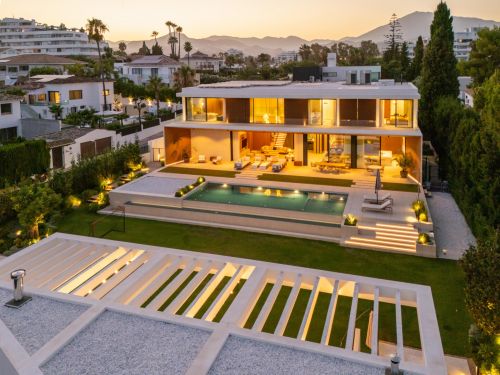
6 bedroom villa for sale in Guadalmina Alta, San Pedro de Alcantara
Guadalmina 720 epitomizes contemporary Marbella living, offering a sophisticated retreat for those who value style, comfort, and privacy. Located in the prestigious Guadalmina Alta area of San Pedro de Alcántara, this…
- 6 beds
- 7 baths
- Plot: 1,640 m²
- Interior: 1,057 m²
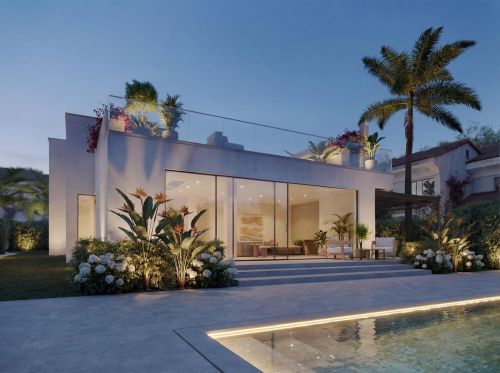
4 bedroom villa for sale in Guadalmina Alta, San Pedro de Alcantara
This exceptional villa is nestled in the prestigious Guadalmina Alta, one of Marbella's most coveted residential enclaves. The property offers complete privacy while being moments from championship golf courses, exclu…
- 4 beds
- 5 baths

2 bedroom apartment for sale in Guadalmina Alta
Come to this great apartment ready to live in the prestigious urbanization Campos de Guadalmina. Its possition is high so it enjoys an unbeatable view over the Golf Course and mountains around; The apartment is perfec…
- 2 beds
- 2 baths

2 bedroom apartment for sale in Campos de Guadalmina
Beautifully presented, this renovated two-bedroom apartment is located in the popular Campos de Guadalmina community, close to shops, restaurants, beaches, schools and golf courses. The property features a bright open…
- 2 beds
- 2 baths
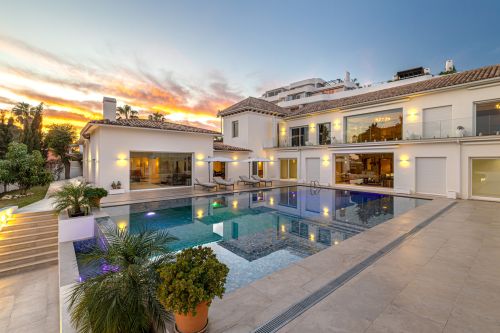
7 bedroom villa for sale in Guadalmina Alta, San Pedro de Alcantara
An extraordinary home offering incomparable quality on the glorious Costa del Sol. We are delighted to present one of the largest villas in the prestigious Guadalmina Alta, a fully refurbished and beautifully interior…
- 7 beds
- 9 baths
- Plot: 2,600 m²

2 bedroom apartment for sale in Campos de Guadalmina
Bright and spacious, this two-bedroom apartment is located in the sought-after community of Campos de Guadalmina, close to a wide range of amenities, including shops, restaurants, beaches, schools and golf courses. Th…
- 2 beds
- 2 baths
- Interior: 88 m²
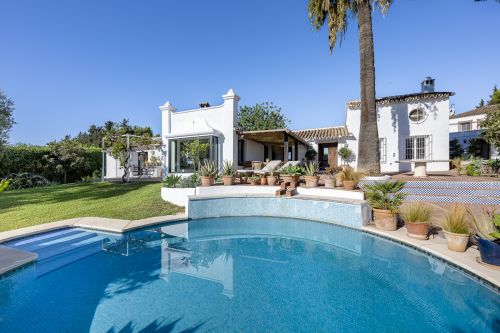
3 bedroom villa for sale in Guadalmina Alta, San Pedro de Alcantara
Located in Guadalmina Alta, this beautiful country villa is set in an established area of traditional fincas and villas, offering a more rustic, countryside feel than many of the nearby residential areas. The neighbou…
- 3 beds
- 2 baths
- Plot: 2,008 m²
- Interior: 219 m²
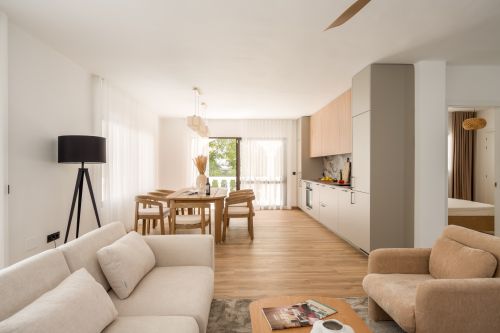
5 bedroom villa for sale in Guadalmina Alta, San Pedro de Alcantara
Casa Vera is set in Guadalmina, one of Marbella’s most established residential areas, known for its generous private plots, mature landscaping and quiet atmosphere. The Real Club de Golf Guadalmina, the beach, promena…
- 5 beds
- 4 baths
- Plot: 972 m²
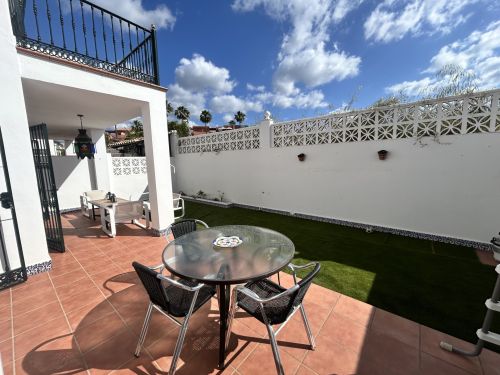
3 bedroom town house for sale in Guadalmina Alta
Semidetached house perfect for family prepared to enter to live, a large and practical home of four plants nothing less !. It is accessed through a sunny patio to the main floor consisting of large living room, kitche…
- 3 beds
- 2 baths
- Plot: 200 m²

5 bedroom villa for sale in Guadalmina Alta, San Pedro de Alcantara
Villa with private pool on the golf course front line – Isla de Guadalmina, Guadalmina Alta In the heart of the renowned Isla de Guadalmina development is this attractive villa on the golf course front line, with unob…
- 5 beds
- 4 baths
- Plot: 550 m²
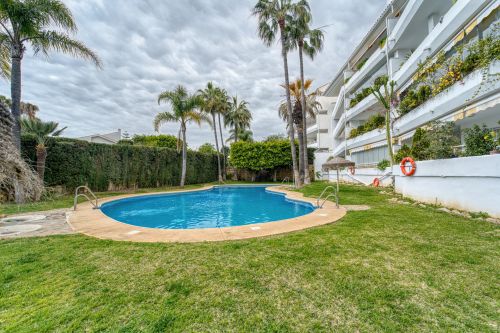
5 bedroom duplex penthouse for sale in Guadalmina Baja
Located in Guadalmina Baja, San Pedro de Alcántara, this spacious duplex penthouse offers 290 m² of built space, including 210 m² of interior accommodation and 80 m² of terraces. With five bedrooms, all with en-suite…
- 5 beds
- 5 baths
- Interior: 210 m²
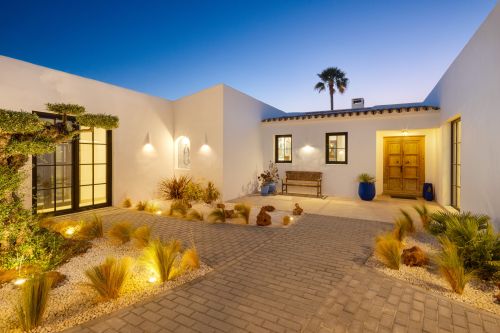
8 bedroom villa for sale in Guadalmina Alta, San Pedro de Alcantara
Welcome to Villa Alta Serenity, an exceptional 8-bedroom luxury villa in Guadalmina Alta, San Pedro de Alcántara, combining contemporary elegance, generous living spaces and privacy in one of Marbella’s most desirable…
- 8 beds
- 7 baths
- Plot: 1,400 m²
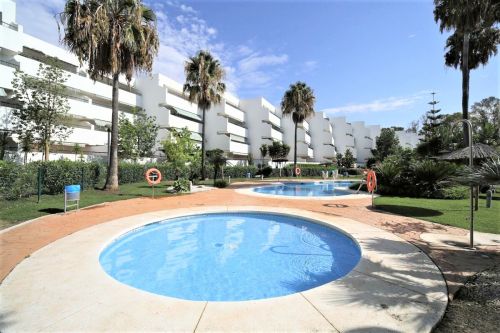
5 bedroom duplex penthouse for sale in Guadalmina Baja
Exclusive Duplex Penthouse in Las Adelfas de Guadalmina Baja – Marbella Imagine a serene lifestyle without the need for a car in the prestigious Guadalmina Baja, a sought-after beachside enclave in San Pedro de Alcánt…
- 5 beds
- 5 baths
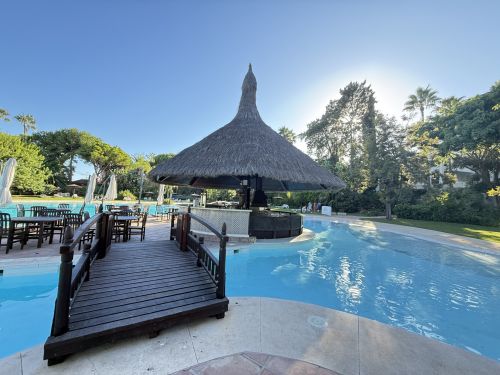
3 bedroom penthouse for sale in Guadalmina Baja
Imagine a home where luxury meets comfort on the captivating Costa del Sol. I present to you this magnificent property that redefines the concept of coastal living. With three spacious bedrooms and three bathrooms, tw…
- 3 beds
- 3 baths

4 bedroom villa for sale in Guadalmina Baja, San Pedro de Alcantara
Villa Maya – a magnificent four-bedroom modern beachside villa, located in one of the Costa del Sol’s most exclusive residential areas, Atalaya Isdabe, on the cusp of Guadalmina Baja. This property is just a few minut…
- 4 beds
- 4 baths
- Plot: 1,368 m²
- Interior: 344 m²
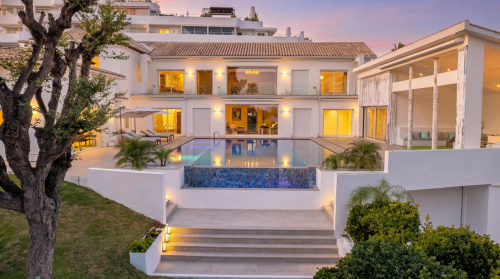
7 bedroom villa for sale in Guadalmina Alta, San Pedro de Alcantara
A seven-bedroom villa for sale in Guadalmina Alta, recently refurbished and set on a private plot of around 2,500m², within a one-minute walk of Real Club de Golf Guadalmina and a seven-minute drive to Puerto Banús. T…
- 7 beds
- 7 baths
- Plot: 2,526 m²

3 bedroom villa for sale in Guadalmina Alta, San Pedro de Alcantara
This charming country house in the exclusive area of Guadalmina Alta harmoniously combines the tranquility of rural living with close proximity to all essential amenities. With impressive panoramic views of idyllic na…
- 3 beds
- 2 baths
- Plot: 2,008 m²
- Interior: 219 m²
Free download
The Marbella Buyers Guide
Everything a buyer needs before the first viewing in Guadalmina or anywhere else on the coast: the purchase process step by step, the taxes and fees, the checks that decide whether a property is sound, and how the market has actually been behaving.
- ProcessReservation, private contract, completion at the notary, and the timings between them.
- CostsTransfer tax, VAT on new build, notary, registry and legal fees, worked through on a real price.
- ChecksCadastre, land registry, planning status, community accounts and running costs.
Prefer to read it online? The buyers guide page. Every figure on this page sits in our property market data.

Talk to us
Tell us how you want to live at this end of the coast
Guadalmina Baja, Guadalmina Alta and San Pedro next door suit very different people, and the difference is not price. Tell us what the days should look like, and we will send you the streets that deliver it, with the honest drawbacks of each and the running costs in front of you before you view.
A person reads this and a person replies, usually the same day. No automated drip, no passing your details to another agency, and no obligation to view anything.
We have 25 years of experience in this market.
