Málaga city passed 600,000 residents for the first time on 1 January 2026, at 603,144 people, and it added 5,971 of them in a single year. That is more than Madrid added, at 4,465, and far more than Barcelona, which managed 447. Only Sevilla and Valencia grew faster among the big Spanish capitals in absolute terms. Costa del Sol population growth on that scale is the clearest leading indicator we have for where housing demand on this coast goes next, and it arrives well before the sales figures catch up.
The figures come from the INE’s Estadística Continua de Población, the quarterly count that has replaced the old annual padrón as the first read on who lives where. They are provisional, as every first release is, but they revise by small amounts rather than by direction, and the Costa del Sol population growth they record has run the same way in every release since the series began. The Málaga and Marbella breakdown below follows El Español’s reading of the same release, published on 7 August 2026.
Costa del Sol population growth in the INE numbers
Foreign nationals delivered 93.5% of Málaga’s increase. Their number rose from 69,892 to 75,476 between January 2025 and January 2026, a gain of 5,584 people and 7.99% in twelve months, and they now make up 12.5% of the city, roughly one resident in eight. Barcelona added more foreign residents in raw numbers, 6,460 against Málaga’s 5,584, but on a base six times larger, so its foreign population grew 1.5% while Málaga’s grew close to 8%.
That puts Málaga fifth among Spanish capitals for foreign residents, behind Madrid at 662,994, Barcelona at 444,123, Valencia at 172,387 and Alicante at 82,746, and ahead of Sevilla, Murcia, Bilbao and Valladolid. Five years earlier, on 1 January 2021, the city counted 578,063 people, so the half decade has added 25,081. Costa del Sol population growth is not a bounce from one favourable year. The INE series shows the same direction every quarter since the count began.

Marbella, where almost a third of residents are foreign
The provincial capital takes the headlines, but the figures that matter to our clients sit forty minutes down the A-7. Marbella rose from 160,478 to 162,155 residents over the same year, and its foreign population climbed from 49,813 to 51,389. Every one of the 1,677 people the town gained is accounted for by foreign nationals, with room to spare, because the Spanish national count moved the other way.
That is Costa del Sol population growth in its purest form. A town of 162,000 people, at the end of a motorway rather than at the centre of a labour market, still adding residents at more than 1% a year, almost all of them from outside Spain.
Put those two numbers together and 31.7% of Marbella is now foreign, against 12.5% in Málaga city and 14.6% nationally. Marbella did not become an international town this year. It has been one for fifty years, and the latest INE release confirms that the share is still rising rather than settling. In Benahávis and Estepona the same pattern holds at different scales, and in the gated urbanisations above the Golden Mile the foreign share runs far higher than the municipal average.
We see it in our own enquiry book before the statisticians see it in theirs. The buyers who complete on this coast increasingly already live on it, renting for a year or two while they find the right house, and the INE count picks them up the moment they register. Costa del Sol population growth and our pipeline are the same people at different points in the same journey.
Why Costa del Sol population growth beats sales figures as a demand signal
Transaction volumes and asking prices describe deals that have already happened. A population count describes the pressure building underneath them, usually a year or more before it shows in the quarterly market data. Every new resident needs a home on the day they arrive, whether they rent or buy, and that pressure lands on the existing stock immediately, because nobody builds a flat in the time it takes to register at the town hall.
The compounding matters more than the first move. A family that arrives and rents brings parents who visit, friends who stay, colleagues who relocate, and in our experience a meaningful number of those visitors become buyers within three years. Costa del Sol population growth therefore feeds itself. Reading the INE figures beside our own enquiry records, the municipalities with sustained resident growth show broader and more durable buyer interest than the ones that had a good quarter of sales without the people behind it.
The rental market is where Costa del Sol population growth shows first. A newly registered household rents before it buys, so long term rents in Málaga city and Marbella tighten in the same quarter the count rises, and the purchase enquiry follows twelve to twenty four months later. Anyone reading only the sales data sees the second step and misses the first.
The first quarter of 2026 showed exactly that. Volumes across the province held up while the interior of Spain softened, and the difference was demand from people who had already decided to live here rather than from investors deciding whether to. Our Q1 2026 report has the transaction detail, municipality by municipality.

Two streams feeding Costa del Sol population growth
The INE release does not split municipal growth by nationality, but the national picture tells you what is happening. Across Spain the largest inflows in the final quarter of 2025 came from Colombia, Venezuela and Morocco, and Spain passed ten million foreign born residents for the first time. That is working age migration into the labour market, and on this coast it is concentrated in construction, hospitality and the services that keep the lifestyle economy running.
Layered over it is the older flow that built Marbella, buyers and retirees from the United Kingdom, Scandinavia, Germany, the Netherlands and Belgium, joined in the last five years by the Gulf, the Americas and, since the residency routes changed, a rising number of non European families who move here first and buy second. Costa del Sol population growth is both streams at once, and they land on different parts of the market.
The first stream sustains rental demand and the protected housing programmes the councils are now expanding, which we covered in the Andalucía resale and new build piece. The second sustains the mid and upper resale and new build market our clients transact in. Treat them as one wave and you misread where the pressure sits. Treat them as two and the rental yields in Málaga city and the villa prices in Nueva Andalucía suddenly explain each other.
How Costa del Sol population growth compares with the rest of Spain
Spain grew by 81,520 people in the fourth quarter of 2025 to reach 49,570,725, the highest figure in the historical series, and by 442,428 over the year. Foreign nationals rose by 56,431 in the quarter to 7,243,561 while Spanish nationals rose by 25,089. Population grew in every autonomous community except the Balearic Islands, and the largest quarterly increases were in the Comunitat Valenciana, Castilla-La Mancha and Madrid.
Against that backdrop Málaga stands out for capturing far more than its share. It is Spain’s sixth largest city, yet in raw numbers it added more people over the year than the capital did. Andalucía as a whole grew only modestly in the quarter, which means the region’s growth is concentrated on this stretch of coast rather than spread across it. Costa del Sol population growth is a local pull, climate, an established international community and an airport with direct flights to most of northern Europe, sitting inside a national trend rather than riding on it. Madrid grows because it is the capital. Málaga grows because people choose it.

Housing supply and how the councils are responding
A city adding six thousand residents a year and a town adding sixteen hundred cannot house them in stock that already exists without moving prices. The councils know it. Marbella’s building licence reform this year, which took most works under €15,000 out of the licence queue, and Estepona’s expanded protected housing programme are both municipal answers to the Costa del Sol population growth the INE count describes. Neither will change the arithmetic quickly. New supply takes three to five years from licence to key, and the people arriving now need somewhere to live this year.
For owners, Costa del Sol population growth is the strongest medium term support a market can have. Demand from people who live here is stickier than demand from investors who could live anywhere, and it does not switch off when a currency moves. If you are weighing a sale, the valuation calculator gives a first read on where a property sits, and our sales team will set it against the closed transactions rather than the asking prices.
For buyers the message is the mirror image. Waiting for prices to soften in a market with this much Costa del Sol population growth behind it has a cost of its own, because the people driving the demand are not waiting. The buyers’ guide sets out how a purchase runs here, and if you tell us what you are looking for we will show you the properties that fit before they reach the portals.

What five years of Costa del Sol population growth looks like on the ground
Percentages hide the physical scale. Málaga city alone added 25,081 people between January 2021 and January 2026, roughly the population of Nerja moving into a single municipality in half a decade, and the province added many times that. Every one of them lives somewhere, in a rented flat in Teatinos, a first purchase in Rincón de la Victoria, or a considered lifestyle purchase on the Golden Mile funded by a career somewhere colder. Costa del Sol population growth is those households, one at a time, each of them a tenant or a buyer within weeks of arriving.
This is why we read the population release before we read the price index. Prices and cranes are downstream of people, and the INE count is the earliest honest signal of where the market is going. The next release covers 1 April 2026 and we will set it against our own enquiry data again when it lands. If you want to know what Costa del Sol population growth means for one street, one urbanisation or one house, that is the conversation we have every day, and we would rather have it with you before the next quarter’s figures make the same point.
How many people live in Málaga in 2026?
603,144 at 1 January 2026 according to the INE Estadística Continua de Población, provisional figures published in February 2026. The city added 5,971 residents in a year, more than Madrid or Barcelona, and passed 600,000 for the first time.
What is driving Costa del Sol population growth?
Foreign nationals. They accounted for 93.5% of Málaga city’s increase in the year to January 2026, rising from 69,892 to 75,476, and every one of the 1,677 people Marbella gained. Working age migration into the labour market and lifestyle buyers from northern Europe, the Gulf and the Americas arrive at the same time and land on different parts of the housing market.
How many foreign residents does Marbella have?
51,389 at 1 January 2026, up from 49,813 a year earlier, out of a total population of 162,155. That is 31.7% of the town, against 12.5% in Málaga city and around 14.6% across Spain, and it is the clearest local expression of Costa del Sol population growth.
Is Costa del Sol population growth pushing up property prices?
Yes, and it is the most durable kind of pressure a market can have, because it comes from people who live here rather than investors who could live anywhere. Every new resident needs a home on the day they arrive, so demand lands on the existing stock first. Ask us and we will set the population figures against closed transactions for the area you are looking at.
Which grew more in 2025, Málaga or Madrid?
Málaga, in absolute terms. Málaga added 5,971 residents in the year to January 2026 while Madrid added 4,465 and Barcelona 447. Only Sevilla, with 9,755, and Valencia, with 7,104, grew faster among the large Spanish capitals.
The Costa del Sol property market continues to evolve, but informed decisions begin with reliable data. Download the JUST Q2 2026 Golden Triangle Market Report today and gain exclusive insight into one of Europe’s most resilient and internationally driven residential markets.

DOWNLOAD OUR Q2 2026 MARKET REPORT NOW
Free to read and free to quote, provided any figure is attributed to JUST Real Estate and names the edition it came from.
Research enquiries:
James Evans — Managing Partner
📞 +34 643 390 376 | ✉️ james@justrealestate.es
Sales enquiries:
Alina Nouaimeh — Partner
📞 +34 600 689 749 | ✉️ alina@justrealestate.es
FAQ
Is the JUST Market Report free to download?
Yes. The report is available as a complimentary download and provides professional analysis of the Marbella, Estepona and Benahávis property markets.
Who is the report designed for?
The report is written for buyers, sellers, investors, developers, relocation clients, family offices and anyone seeking accurate, data-led insight into the Costa del Sol property market.
Where does the data come from?
Our analysis uses official information from Registradores de España, INE, Notariado, Tinsa, Banco de España and other recognised industry sources, combined with our own market observations and research.
How often is the report updated?
JUST Real Estate publishes a comprehensive market report every quarter, ensuring readers have access to the latest available market intelligence.
Our latest listings
View our latest listings of luxury properties for sale, where sophistication and comfort come together for an exceptional living experience.

5 bedroom villa for sale in Mijas
- 5 beds
- 6 baths
- Plot: 1,805 m²
- Interior: 465 m²
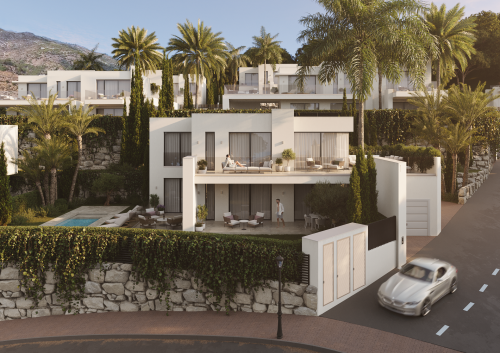
4 bedroom villa for sale in Mijas Pueblo, Mijas
- 4 beds
- 4 baths
- Plot: 580 m²
- Interior: 150 m²
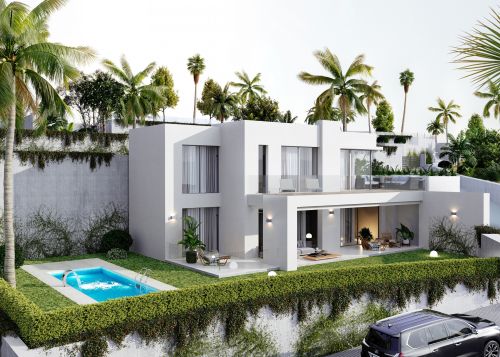
4 bedroom villa for sale in Mijas
- 4 beds
- 4 baths
- Plot: 580 m²
- Interior: 150 m²

3 bedroom apartment for sale in Mijas
- 3 beds
- 2 baths
- Plot: 34.98 m²
- Interior: 79 m²

4 bedroom house for sale in Mijas Pueblo, Mijas
- 4 beds
- 3 baths
- Plot: 340 m²
- Interior: 186.8 m²

3 bedroom house for sale in Mijas Pueblo, Mijas
- 3 beds
- 2 baths
- Plot: 340 m²
- Interior: 164.82 m²

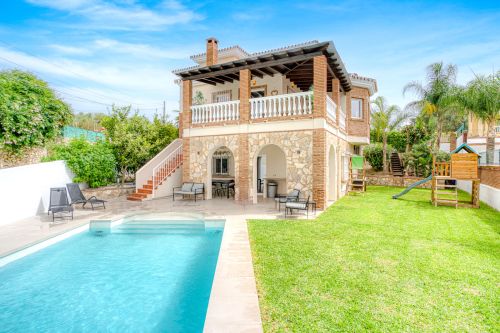
6 bedroom villa for sale in Mijas
- 6 beds
- 4 baths
- Plot: 658 m²
- Interior: 360 m²

5 bedroom house for sale in Valtocado, Mijas
- 5 beds
- 4 baths
- Plot: 41,000 m²
- Interior: 378 m²

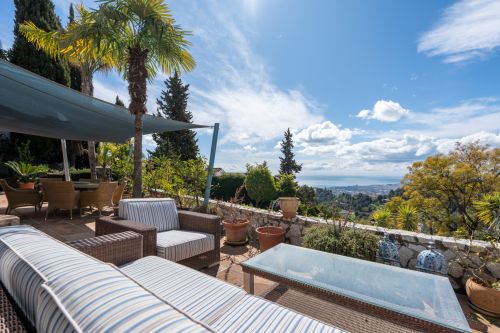
4 bedroom villa for sale in Mijas Pueblo, Mijas
- 4 beds
- 4 baths
- Plot: 1,974 m²