Spain Rent Increase 2026 has become one of the most searched topics among landlords and tenants alike, yet confusion remains widespread. Many property owners still assume that annual rent reviews automatically follow inflation, while others believe the government’s temporary rental caps remain in force. The reality is more nuanced. The amount by which rent can be increased this year depends largely on when the tenancy agreement was signed and, crucially, what was agreed within the contract itself.
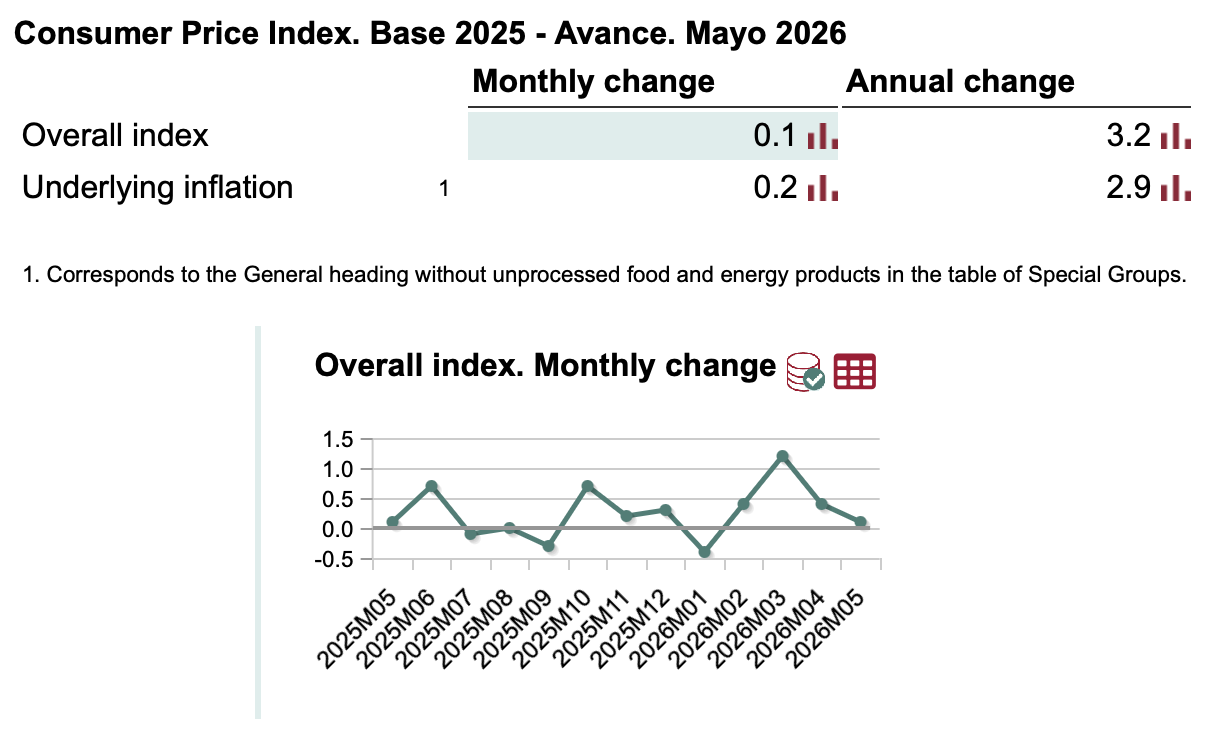
With the latest figures published by Spain’s National Statistics Institute showing that the applicable index stood at 3.2% in April 2026, landlords across Marbella and the Costa del Sol are now reviewing whether they are entitled to increase rents and, if so, by how much. Understanding the rules has never been more important, particularly as the Spanish rental market continues to evolve under the Housing Law introduced in recent years.
Table of Contents
How Rent Increases Work in Spain
Contrary to popular belief, landlords cannot simply increase rent whenever inflation rises. Article 18 of Spain’s Urban Leases Act, known as the Ley de Arrendamientos Urbanos (LAU), establishes that rent reviews may only take place if an annual update clause has been expressly included within the tenancy agreement. If no such provision exists, the rent remains unchanged for the duration of the contract.
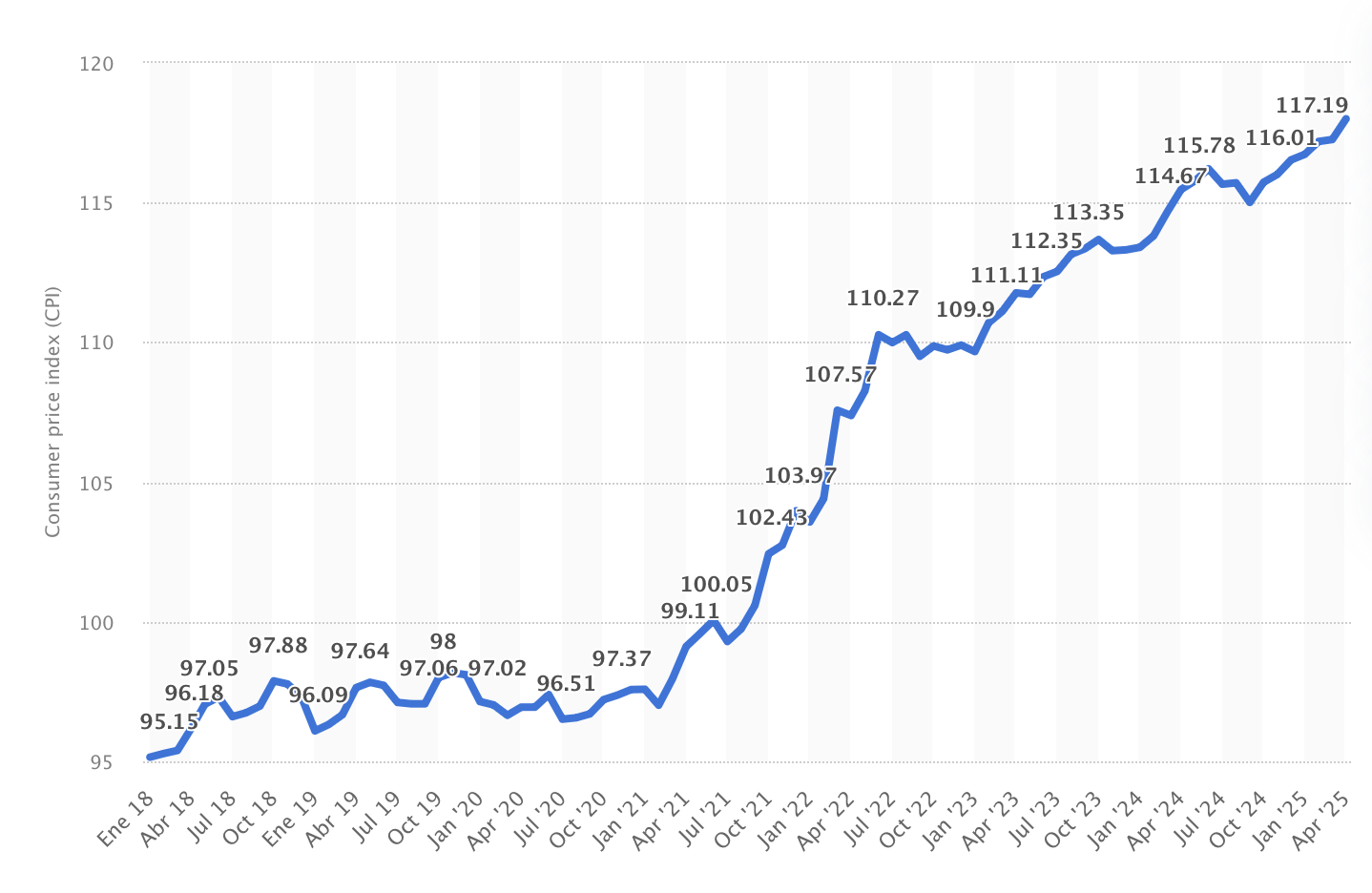
Historically, most contracts linked annual reviews to the Consumer Price Index, commonly referred to as the CPI. For decades, this provided a straightforward mechanism allowing rents to move broadly in line with the cost of living. However, successive government interventions during periods of elevated inflation altered this approach, introducing temporary caps and eventually creating a new methodology designed specifically for residential leases.
As a result, the first question every landlord should ask in 2026 is not what the CPI happens to be, but rather when the tenancy agreement was signed and which index the contract references.

Understanding CPI and the New INE Index
The Consumer Price Index measures changes in the cost of goods and services purchased by households. Compiled by Spain’s National Statistics Institute, it tracks price movements across what is often referred to as the “shopping basket”, ranging from food and transport to energy and household expenses. In April 2026, the CPI stood at 3.2%, indicating that consumer prices were 3.2% higher than during the same period the previous year.
For many older tenancy agreements, this figure remains highly relevant because CPI continues to be the agreed mechanism for annual rent reviews. However, contracts signed after the implementation of Spain’s Housing Law are generally subject to a new reference index established by the INE.
This newer index seeks to moderate rental growth by taking the lowest value derived from several economic indicators, including the annual CPI, underlying inflation and an adjusted average variation rate. In April 2026, this index also stood at 3.2%, meaning that, at least for now, the practical effect has been identical.

Which Contracts Can Increase by 3.2% in 2026?
Broadly speaking, residential tenancy agreements fall into two categories. Contracts signed before the Housing Law entered into force in May 2023 continue to be governed by whatever was agreed between landlord and tenant. In most cases, this means CPI-linked reviews remain valid, provided the contract specifically includes an annual update clause.
By contrast, contracts entered into after the Housing Law generally follow the new INE methodology designed for residential rent updates. The intention behind the reform was to introduce greater predictability and prevent exceptional inflation from translating directly into steep rental increases. Commercial premises operate under different rules altogether. The parties remain free to determine the mechanism governing annual updates, whether that be CPI, a fixed percentage increase or another mutually agreed index.
For landlords with multiple properties, particularly those operating mixed portfolios of residential and commercial assets, understanding these distinctions is essential.
How to Calculate a Rent Increase
Once the applicable index has been identified, calculating the increase itself is relatively straightforward. The current monthly rent should first be multiplied by the relevant percentage expressed as a decimal. The resulting figure represents the amount of the increase and is then added to the existing rent to determine the revised monthly payment.
Landlords should also remember that they cannot simply implement the increase retrospectively. Appropriate notice must be given to the tenant in accordance with the terms of the tenancy agreement, and many owners choose to provide at least one month’s written notice before the revised rent becomes payable.
Timing also matters. Because official inflation figures are published after the relevant month has ended, the applicable index is generally taken from two months prior to the anniversary date of the contract.
Examples Using Marbella Rental Figures
Consider a landlord in Marbella receiving €1,200 per month under a tenancy agreement eligible for a 3.2% update. Applying the calculation results in an increase of €38.40 per month, producing a revised rent of €1,238.40.
For higher-value properties, the figures become more substantial. A long-term rental generating €2,500 per month would increase by €80, resulting in a new monthly rent of €2,580. At the upper end of Marbella’s market, where premium villas may command rents of €5,000 per month or more, a 3.2% adjustment would equate to an additional €160 each month.
Viewed individually, these increases may appear modest. Over the course of a year, however, they can represent a meaningful enhancement to net income while helping owners preserve purchasing power against rising operating costs.
Examples Using Marbella Rental Figures
The ability to review rents annually provides landlords with an important safeguard, particularly in a market where maintenance costs, insurance premiums, community fees and taxation have all experienced upward pressure. However, the strongest investment strategies rarely focus solely on maximising short-term returns. Retaining high-quality tenants, minimising vacancy periods and fostering positive landlord-tenant relationships often prove equally valuable over the long term.
Managing Partner James Evans comments, “Many owners instinctively look at the maximum increase permitted, but the right decision often depends on the broader context. Tenant quality, renewal prospects and long-term objectives should all form part of the conversation.”
Marbella’s rental market remains fundamentally robust, underpinned by international demand, lifestyle migration and a limited supply of quality accommodation. Yet regulatory change continues to reshape the landscape. Understanding how and when rent reviews may be applied has therefore become an increasingly important aspect of professional property ownership.
For landlords, clarity brings confidence. Whether managing a single apartment or an extensive portfolio, taking the time to understand the Spain Rent Increase 2026 rules ensures decisions are both legally compliant and commercially sound.

DOWNLOAD OUR Q4 MARKET REPORT NOW
Research enquiries:
James Evans — Managing Partner
📞 +34 643 390 376 | ✉️ james@justrealestate.es
Sales enquiries:
Alina Nouaimeh — Partner
📞 +34 600 689 749 | ✉️ alina@justrealestate.es
Our latest listings
View our latest listings of luxury properties for sale, where sophistication and comfort come together for an exceptional living experience.

Villa for sale in Mijas Pueblo
- 4 beds
- 4 baths
- Plot: 580 m²
- Interior: 150 m²

Exclusive Villas with Stunning Views
- 4 beds
- 4 baths
- Plot: 580 m²
- Interior: 150 m²

Panoramic sea view apartment in a Prime Costa del Sol Location
- 2 beds
- 2 baths

Recently reformed, stunning six bedroom villa in Mijas, with private pool
- 6 beds
- 4 baths
- Plot: 658 m²
- Interior: 360 m²

Exceptional Luxury Equestrian Property at the Gates of Valtocado – Mijas Pueblo
- 5 beds
- 4 baths
- Plot: 41,000 m²
- Interior: 378 m²

Elegant 4-Bedroom Luxury Villa Walking Distance to Mijas Pueblo
- 4 beds
- 4 baths
- Plot: 1,974 m²


Flat plot with beautiful views in Lomas del Flamenco, close to Mijas Golf!
- Plot: 847 m²