The Costa del Sol desalination project may be the most consequential piece of infrastructure ever planned for this coastline, and almost nobody buying property here is talking about it. In June 2026 the contract to design the plant was formalised, which started the clock on an installation intended to secure water for roughly half a million people along the western Málaga coast.
Water seldom features in property conversations here. It should. Supply security sits quietly beneath everything else that matters in this market: whether town halls can grant building licences, whether developers can deliver new schemes, and whether the resorts, golf courses and gardens that define the lifestyle can be sustained. What follows is a straightforward account of what the Costa del Sol desalination project is, why it is being built, where it stands today, and what it genuinely means if you own or are buying property on this coast.
What the Costa del Sol desalination project actually is
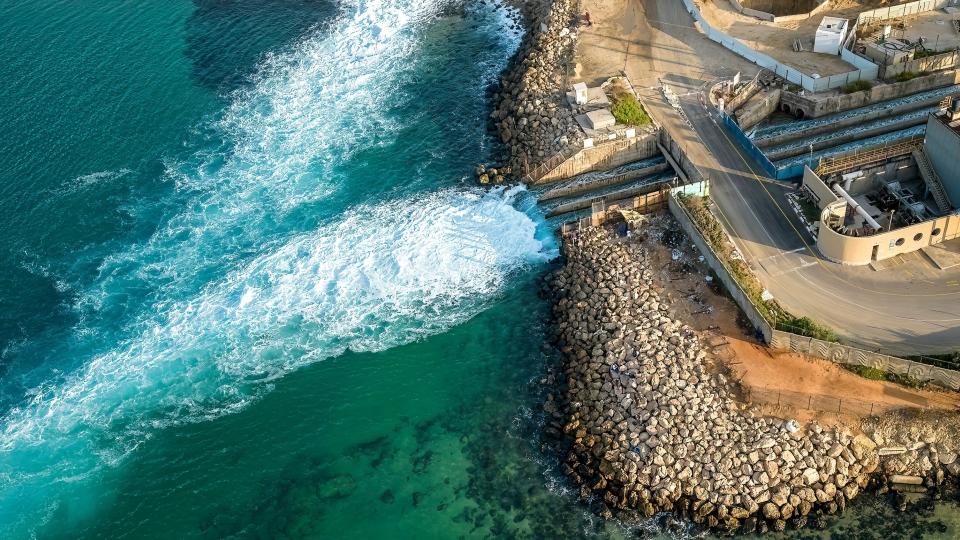
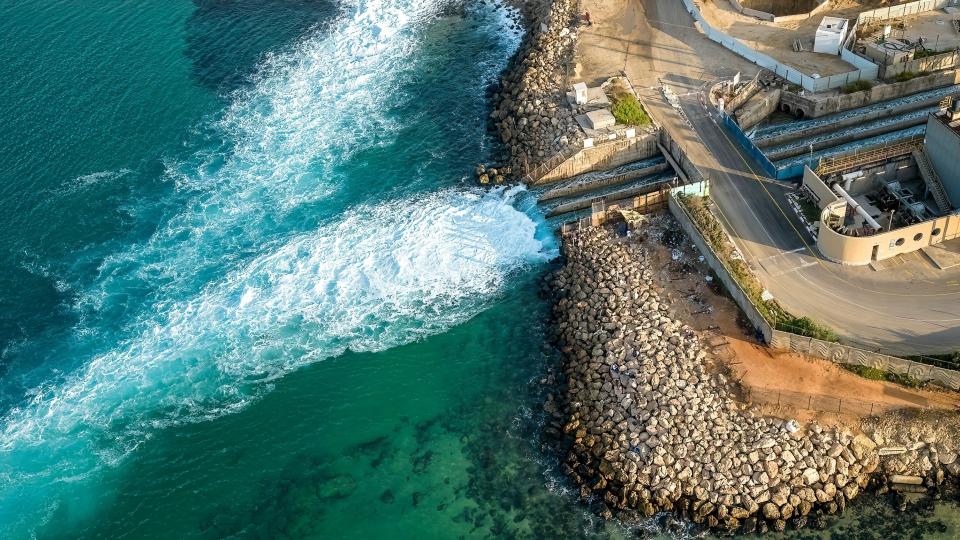
The Costa del Sol desalination project is a large scale seawater plant planned to serve the municipalities of the western Málaga coastline. It is being advanced as strategic infrastructure, which is the language governments tend to use once something has stopped being optional.
The scale is considerable. The installation is being sized to serve in the region of 500,000 inhabitants. That figure is not simply a headcount of residents. It reflects the seasonal reality of a coast whose effective population swells substantially each summer, precisely when rainfall is scarcest and demand is at its peak.
The essential difference between a desalination plant and a reservoir is that a plant does not wait for rain. It converts an unpredictable, weather dependent problem into a far more manageable question of engineering and energy. That, in a sentence, is the whole point of the Costa del Sol desalination programme.
Why the Costa del Sol desalination plant is needed
A coastline supplied by a single reservoir
Water supply on the western Costa del Sol depends principally on the La Concepción reservoir, which is fed by the Río Verde and reinforced by transfers. Its average annual contribution sits at roughly 63 cubic hectometres.
Concentrating the supply of an entire international resort coastline behind one principal reservoir is, to put it politely, a structural vulnerability. In a wet year the arrangement works perfectly well. Across a run of dry years it does not, and this region has lived through exactly that sequence, with restrictions and emergency measures becoming a recurring feature of local government.
Growth, tourism and drought, all at once
Three pressures compound one another here. Urban growth has added homes and demand year after year. Tourism has intensified, and luxury tourism in particular is thirsty, from hotels and spas through to golf and landscaping. Meanwhile recurrent drought and the overexploitation of aquifers have steadily reduced the resilience of the natural system.
The consequence is that water has moved from a background utility question to a front line strategic issue. The Costa del Sol desalination plant is the most direct answer available, because it adds a source of supply that is entirely indifferent to the weather.
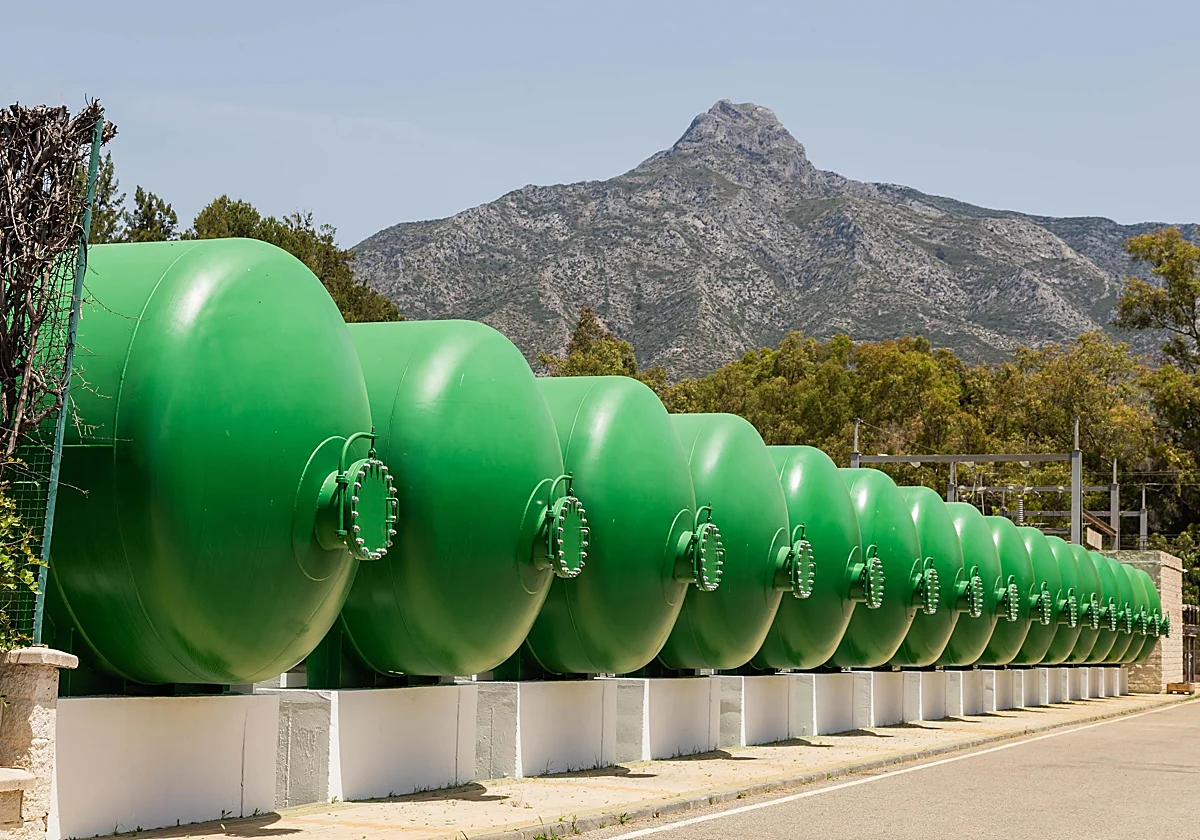
Where the Costa del Sol desalination project stands in 2026
The design contract
In June 2026 the contract to design the infrastructure was formalised, awarded at approximately 859,819 euros including taxes, with an execution period of 24 months. In plain terms, the engineering design phase is now under way, and it is a two year piece of work.
This matters rather more than another press announcement. Formalising a design contract is the moment a project stops being a stated intention and becomes a funded technical process with a timetable attached.
A realistic timeline
It pays to be honest about the calendar. A 24 month design phase is followed by tendering, construction and the commissioning of a substantial industrial facility. The Costa del Sol desalination plant is therefore a late decade proposition rather than a fix for next summer.
Its value to the property market in the meantime lies in being a credible, funded trajectory towards supply security. Markets tend to price the direction of travel long before they price delivery.
How desalination actually works
Most modern seawater desalination, including the technology expected here, relies on reverse osmosis. Seawater is drawn in, filtered to remove sediment and organic matter, then forced under high pressure through membranes whose pores are fine enough to hold back dissolved salts. What passes through is fresh water. What does not is a concentrated brine.
Two practical consequences follow. The first is energy, since pushing seawater through those membranes is the dominant cost. This is why desalinated water is generally more expensive to produce than reservoir water, and why the economics improve as renewable generation expands across Andalucía. The second is brine management, which must be discharged so that it disperses properly and protects marine habitats.
Both are well understood engineering problems, and both are addressed at precisely the design stage the Costa del Sol desalination project has now entered. It is worth stressing that none of this is experimental. Spain is among the most experienced desalination nations in Europe, with decades of plants operating along its Mediterranean coast.
The wider water strategy, of which desalination is only one part
The Costa del Sol desalination plant is one pillar of a broader regional approach. The Junta de Andalucía has set out a strategy built on treatment, desalination, water regeneration and reuse, alongside better exploitation of existing dams, with the stated ambition that this coast should not face water problems again.
Regenerated water, the quiet workhorse
Regenerated water rarely makes headlines, yet it may well be the most efficient intervention available. Treated and regenerated water can supply irrigation, landscaping, golf courses and street cleaning, which frees potable supply for domestic use. On a coast where a considerable share of consumption goes to landscape and leisure, expanding reuse achieves a great deal for comparatively little money.
The Río Verde upgrade
Approximately 37 million euros is being directed towards improving the Río Verde treatment facility, with the aim of doubling its capacity. That investment matters directly to Marbella and its neighbouring municipalities, and it sits alongside the Costa del Sol desalination project rather than competing with it.
Drought decrees and funding
Regional government has also moved through successive drought decrees, the fourth of which added in the region of 217.8 million euros towards water infrastructure in response to what was described as a critical situation in the reservoirs. Taken together, these commitments represent the most substantial water investment programme this coast has seen in decades.
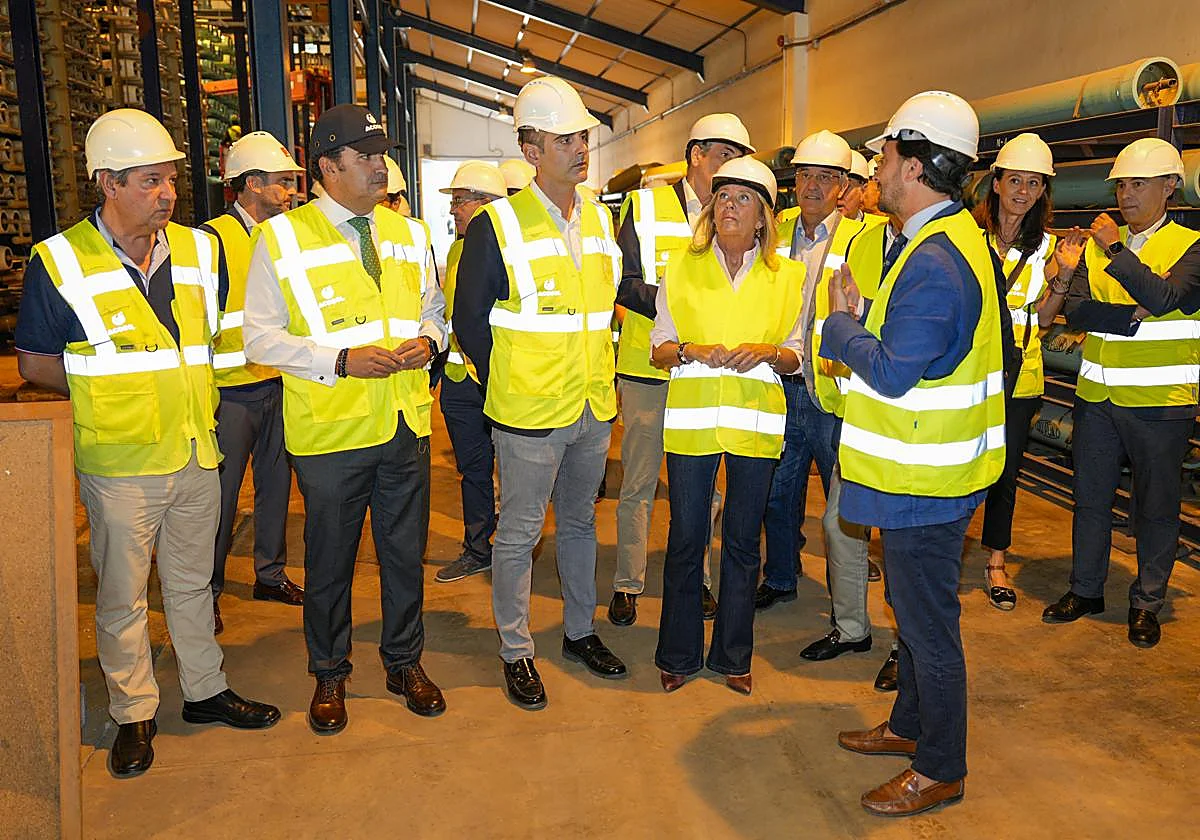
Why water security matters for property values
This is the point at which an engineering story quietly becomes a property story.
Development capacity and building licences
Municipalities must be able to demonstrate sufficient water supply to support new development. Where supply is constrained, that constraint eventually works its way into planning and licensing decisions. Secure supply is therefore a precondition for the new housing this coast badly needs. By adding capacity that does not depend on rainfall, the Costa del Sol desalination plant directly supports the region’s ability to keep approving and delivering homes.
Buyer confidence
International buyers are increasingly alert to climate and resource risk. A destination that visibly manages its water future protects its long term desirability. One that does not would, in time, see that reflected in demand. In that sense the Costa del Sol desalination programme is an investment in the durability of the asset class itself.
Running costs and restrictions
For owners, water security shows up in thoroughly practical ways: the reliability of supply to your home and community, the risk of restrictions affecting pools, gardens and golf, and ultimately the cost of water itself. A diversified supply reduces the likelihood of the emergency measures that make ownership rather less enjoyable during a dry summer.
What other Mediterranean markets tell us
The Costa del Sol is not the first Mediterranean property market to confront this question, and the experience elsewhere is instructive.
Spain’s south eastern coast, in provinces such as Alicante and Almería, has relied on desalination for years to support both agriculture and dense coastal populations. Those regions demonstrate the central lesson rather neatly. Once rainfall independent capacity exists, water ceases to be an annual source of anxiety and becomes a managed utility. Development planning grows more predictable, and the collective wincing that accompanies a dry winter largely subsides.
The useful comparison for buyers is not whether a coast experiences drought, because most Mediterranean coasts do. It is whether that coast has a credible plan. Markets that invested early in diversified supply have generally protected their appeal. Those that deferred the decision met restrictions that eventually reached residents and visitors alike. The Costa del Sol desalination programme places this coast firmly in the first category.
What it means if you already own here
If you own property on the coast, the Costa del Sol desalination project is best read as a positive structural development rather than an immediate change. In the near term, sensible expectations are unchanged. Dry years may still bring restrictions before the new capacity arrives, and communities with generous landscaping would be wise to keep investing in efficient irrigation.
Over a longer horizon the direction is clearly towards greater resilience. For owners holding property as a long term asset, this is precisely the sort of infrastructure commitment that supports value quietly and durably, without ever appearing in a single listing.
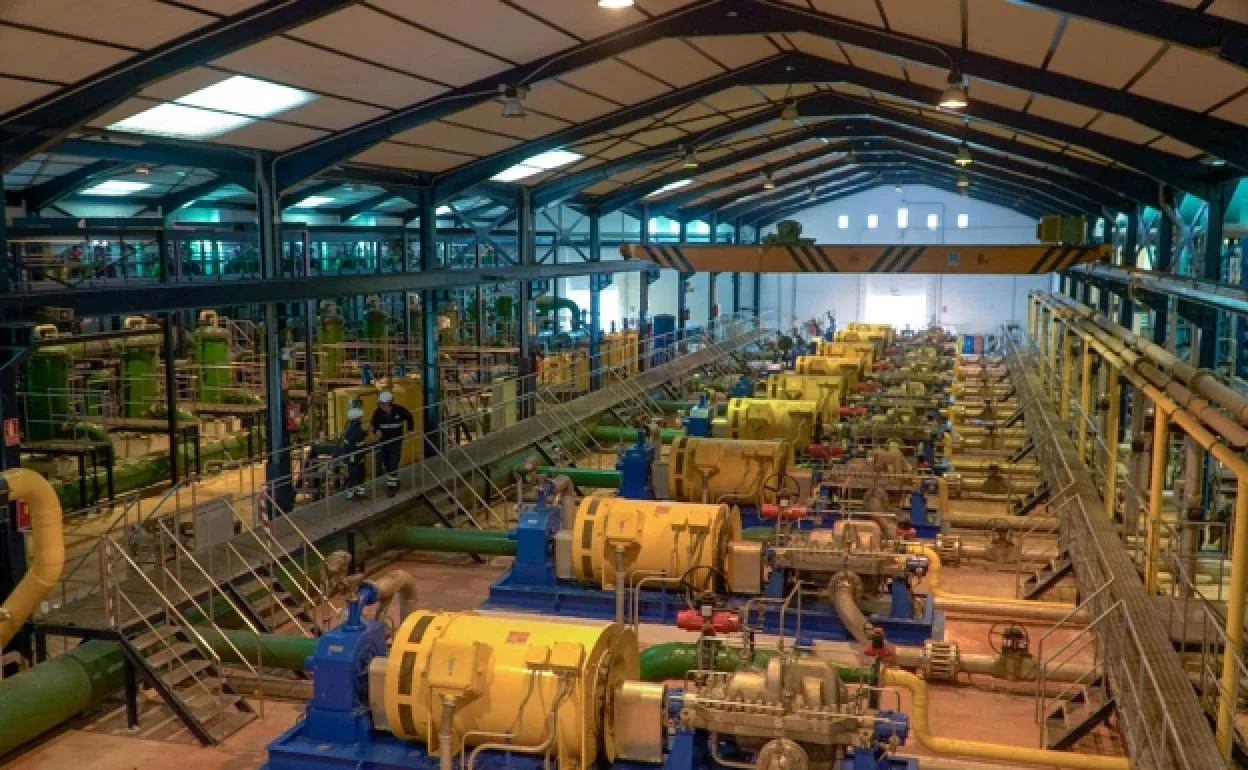
What the Costa del Sol desalination project means for buyers
For buyers, the practical conclusion is that this coast is actively addressing its most significant long term constraint. That is a reason for confidence rather than concern.
It also sits within a broader picture of regional economic strength that we examined in our analysis of Andalusia’s GDP growth, and it complements the supply and demand dynamics set out in our Marbella market report. Infrastructure investment on this scale is a statement about where public authorities expect this region to be in twenty years.
At property level, buyers should still ask the practical questions. How is the community supplied? Does it use regenerated water for landscaping? What are the irrigation and pool arrangements? These are exactly the details we examine as part of a purchase review, and our team can guide you through them from start to finish.
What to watch next
- Completion of the design phase, running on a 24 month timetable from mid 2026.
- Tendering and the construction award for the plant itself.
- Progress on the Río Verde treatment upgrade and its capacity increase.
- Expansion of regenerated water networks for irrigation and municipal use.
- Reservoir levels and any further drought measures in the intervening years.
Frequently asked questions about the Costa del Sol desalination project
When will the Costa del Sol desalination plant be operational?
No operational date has been confirmed. The design contract formalised in June 2026 runs for 24 months, with construction and commissioning to follow. Realistically, this is a late decade facility.
How many people will it serve?
The plant is being sized to serve in the region of 500,000 inhabitants across the western Costa del Sol.
Does this mean water restrictions are over?
Not yet. Until the new capacity is delivered, the region remains dependent on reservoirs, transfers and reuse, so restrictions during dry periods remain possible.
Will desalinated water be more expensive?
Desalination is energy intensive and generally carries a higher production cost than reservoir supply. How that is ultimately reflected in tariffs is a matter for the relevant authorities and has not yet been determined.
Is desalination bad for the environment?
The principal considerations are energy consumption and brine discharge. Modern plants address both through energy recovery systems, increasing use of renewable power, and engineered diffusers that disperse brine safely. These matters are assessed during design and environmental authorisation.
Will this affect golf courses and communal gardens?
Over time it should ease the pressure on them. A significant part of the strategy is expanding regenerated water for irrigation so that landscaping and golf draw less on potable supply. Combined with new capacity from the Costa del Sol desalination plant, that makes restrictions on amenity irrigation less likely in future dry periods.
Should water risk change where I buy on the coast?
For most buyers, no. The regional strategy addresses supply at a coast wide level. What matters more at property level is how an individual community manages irrigation, pools and landscaping.
Key takeaways
- The Costa del Sol desalination plant is designed to serve around 500,000 people on the western Málaga coast.
- The design contract was formalised in June 2026, with a 24 month execution period.
- Supply currently depends heavily on the La Concepción reservoir and the Río Verde, averaging roughly 63 cubic hectometres a year.
- It forms part of a wider strategy including treatment, reuse, a 37 million euro Río Verde upgrade and drought decree funding.
- Water security underpins development capacity, buyer confidence and long term values.
“Buyers ask us about schools, flight routes and golf. Almost nobody asks about water, and yet it is the constraint that quietly determines how much this coast can build over the next twenty years. The fact that serious money is now committed to solving it is one of the most underrated positives in this market.” James Evans, Managing Partner, JUST Real Estate
The bottom line
The Costa del Sol desalination project will not change your next summer, but it may well shape the next two decades of this property market. A coast that secures its water secures its capacity to grow, to welcome visitors, and to sustain the lifestyle that draws international buyers in the first place. For anyone taking a long view on Costa del Sol property, this is infrastructure worth understanding.
The Costa del Sol property market continues to evolve, but informed decisions begin with reliable data. Download the JUST Q1 2026 Marbella Property Market Report today and gain exclusive insight into one of Europe’s most resilient and internationally driven residential markets.

DOWNLOAD OUR Q1 2026 MARKET REPORT NOW
Research enquiries:
James Evans — Managing Partner
📞 +34 643 390 376 | ✉️ james@justrealestate.es
Sales enquiries:
Alina Nouaimeh — Partner
📞 +34 600 689 749 | ✉️ alina@justrealestate.es
FAQ
Is the JUST Market Report free to download?
Yes. The report is available as a complimentary download and provides professional analysis of the Marbella, Estepona and Benahávis property markets.
Who is the report designed for?
The report is written for buyers, sellers, investors, developers, relocation clients, family offices and anyone seeking accurate, data-led insight into the Costa del Sol property market.
Where does the data come from?
Our analysis uses official information from Registradores de España, INE, Notariado, Tinsa, Banco de España and other recognised industry sources, combined with our own market observations and research.
How often is the report updated?
JUST Real Estate publishes a comprehensive market report every quarter, ensuring readers have access to the latest available market intelligence.
Our latest listings
View our latest listings of luxury properties for sale, where sophistication and comfort come together for an exceptional living experience.

Villa for sale in Mijas Pueblo
- 4 beds
- 4 baths
- Plot: 580 m²
- Interior: 150 m²

Exclusive Villas with Stunning Views
- 4 beds
- 4 baths
- Plot: 580 m²
- Interior: 150 m²

Panoramic sea view apartment in a Prime Costa del Sol Location
- 2 beds
- 2 baths

Recently reformed, stunning six bedroom villa in Mijas, with private pool
- 6 beds
- 4 baths
- Plot: 658 m²
- Interior: 360 m²

Exceptional Luxury Equestrian Property at the Gates of Valtocado – Mijas Pueblo
- 5 beds
- 4 baths
- Plot: 41,000 m²
- Interior: 378 m²

Elegant 4-Bedroom Luxury Villa Walking Distance to Mijas Pueblo
- 4 beds
- 4 baths
- Plot: 1,974 m²
Flat plot with beautiful views in Lomas del Flamenco, close to Mijas Golf!
- Plot: 847 m²