The Marbella PGOM is the most consequential change to the way this city is planned in almost forty years. In February 2026 the Junta de Andalucía issued a favourable report on Marbella’s new Plan General de Ordenación Municipal, the first plan in the whole of Andalucía drafted under the region’s new territorial law. For a municipality governed since 1986 by a planning document older than most of the homes built under it, this is rather more than a technical footnote.
What follows is a clear account of what the Marbella PGOM actually is, where it stands today, what still has to happen before it touches your title deeds, and what it means in practice if you own, are buying, or are developing property on this coast.

What the Marbella PGOM actually is
The Marbella PGOM is the municipality’s new general plan, the master document setting out how land across the entire municipal area is classified, structured and permitted to be used. It replaces the Plan General de Ordenación Urbana approved back in 1986.
Crucially, the Marbella PGOM is drafted under LISTA, the Ley de Impulso para la Sostenibilidad del Territorio de Andalucía, the regional law that replaced Andalucía’s previous planning legislation. LISTA divides municipal planning into two separate instruments where there used to be one. That structural change is the single most important thing to grasp about the new framework, and we return to it shortly.
Marbella is the first municipality in Andalucía to carry a plan of this type through to a favourable regional report. That makes the Marbella PGOM a genuine first, and it means the rest of the region will be watching closely to see how it is implemented.
Why the Marbella PGOM matters after nearly forty years
To appreciate why the Marbella PGOM carries such weight, it helps to understand what it is replacing.
The 1986 plan and why it still governs
Marbella’s planning has been governed by a general plan approved in 1986. A later plan was approved in 2010, but it was subsequently annulled by Spain’s Supreme Court. When that annulment took effect, planning authority reverted to the 1986 document.
The practical result is a city whose legal planning framework predates the overwhelming majority of its modern development. Marbella has been transformed since 1986, yet the rules governing land classification remained anchored to a document written for an altogether different city. That mismatch has been the root cause of years of legal uncertainty for owners, buyers and developers alike, and resolving it is precisely what the Marbella PGOM is designed to do.
It also explains why so much due diligence on this coast has historically involved untangling the relationship between what exists on the ground, what the registry says, and what the planning framework actually permits. The Marbella PGOM is the first serious attempt in a generation to bring those three things back into alignment.

Where the Marbella PGOM stands in 2026
The favourable regional report
In February 2026, the Consejería de Fomento, Articulación del Territorio y Vivienda of the Junta de Andalucía issued a favourable report on the final document of the Marbella PGOM and transmitted it to Marbella Town Hall. This was the key regional milestone, the moment the plan cleared the Junta’s substantive review.
What still has to happen
A favourable regional report is not the end of the process. The Marbella PGOM still requires ratification at municipal level, and the documentation continues to be published through official municipal planning channels, which you can follow directly via Marbella’s urbanismo department.
More importantly, the Marbella PGOM does not by itself determine what you can build on a specific plot. That is the job of the second instrument, the POU, which is expected to follow in 2027 or 2028. Until the POU is approved, the detailed rules that apply parcel by parcel are simply not yet in force.
PGOM and POU, and how the two tier system works
Under LISTA, what used to be a single general plan is now split into two documents with distinctly different jobs:
- The PGOM is the structural, strategic tier. It classifies land across the municipality, defines the overall model of the city, and sets the framework for growth, infrastructure and protection.
- The POU, or Plan de Ordenación Urbana, is the detailed tier. It translates that structural framework into the specific parameters applying to individual plots, including heights, densities, setbacks, permitted uses and buildability.
This distinction matters enormously in practice. When people ask what the Marbella PGOM means for their villa or their plot, the honest answer for most properties today is that it sets the direction while the binding detail arrives with the POU. Anyone telling you the new plan has already changed what you can build on a specific parcel is running ahead of the process.
How LISTA changed planning across Andalucía
To read the new framework properly, it helps to understand the regional law behind it. LISTA replaced Andalucía’s previous urban planning legislation and rebuilt the way municipalities plan their territory.
The headline change is the separation of strategic planning from detailed planning. Under the old system, a single general plan had to carry both the long term vision and the fine grained parcel rules. That made plans enormous, slow to draft and vulnerable to legal challenge, because a defect anywhere in the document could jeopardise the whole instrument. Marbella’s own experience with the annulment of its 2010 plan is the clearest possible illustration of that risk.
By splitting the two tiers, LISTA aims to make plans quicker to approve, easier to update and more resilient in court. A municipality can settle its overall model first, then refine the detail without reopening everything. For a city with Marbella’s planning history, that resilience is arguably the most valuable feature of the entire reform.

What the Marbella PGOM means for property owners
Greater legal certainty
The most valuable thing the Marbella PGOM offers owners is certainty. A municipality operating under a forty year old plan, following the annulment of its successor, is a municipality where planning questions are harder to answer definitively. A modern, regionally approved framework reduces that ambiguity. Over time, clearer rules mean cleaner transactions, fewer disputes and better supported valuations.
Land classification and buildability
The Marbella PGOM re-examines how land across the municipality is classified. For some owners this will simply confirm the position they already understood. For others, particularly those holding land at the edges of consolidated urban areas, it may clarify a status that has long been ambiguous. What it will not do, until the POU arrives, is hand down final parcel level buildability figures.
Properties with irregular status
Marbella has a long history of properties whose built reality does not match their planning or registry position. A new general plan is the mechanism through which many such situations are eventually regularised or resolved. If you own a property with any known irregularity, the arrival of the Marbella PGOM is the moment to have its position professionally assessed rather than to assume it quietly resolves itself.
What the Marbella PGOM means for buyers and investors
For buyers, the guidance is refreshingly straightforward. The Marbella PGOM strengthens the long term case for this market without changing how you should go about buying today.
A city moving from a 1986 framework to a modern, regionally endorsed plan is a city reducing its legal risk profile. That is unambiguously positive for a market where a substantial share of purchasers are international and where confidence in the legal framework is genuinely part of the product. It sits alongside the demand and supply dynamics we track in our Marbella market report, and complements the wider thinking we covered in our look at Marbella’s new urban vision.
What it does not do is remove the need for property specific due diligence. If anything, during a transition between planning regimes, verifying the exact urbanistic status of the individual property you are buying matters more rather than less.
What the Marbella PGOM means for new build supply
Developers have spent years working within an outdated framework in a municipality suffering a severe scarcity of well located, developable land. The Marbella PGOM begins to change that context by setting a clear structural model for where and how the city can grow.
The timing caveat is important, though. Because parcel level parameters arrive with the POU in 2027 or 2028, the Marbella PGOM is unlikely to unlock a wave of new supply immediately. Planning, licensing and construction cycles mean that any additional stock this framework eventually enables will reach the market years from now. In the meantime, the shortage of quality supply that defines this coast remains firmly in place.
The timeline, and what to watch next
- February 2026, regional approval. The Junta issued its favourable report on the final document and transmitted it to the town hall. This milestone has already been achieved.
- Municipal ratification. The plan requires formal adoption at municipal level, with documentation published through official planning channels.
- 2027 to 2028, the POU. The detailed plan setting parcel level parameters. This is the stage that will determine specific buildability, heights and densities.
- Subsequent development planning. Individual sectors and areas are then developed through their own instruments, which is where new supply is ultimately unlocked.
The honest summary is that the structural question is close to settled, while the detailed question remains open for another year or two. Anyone making decisions today should plan around the framework actually in force, not the one expected later.
How to check where your own property stands
General commentary about the Marbella PGOM will only take you so far. What matters is your specific plot. A proper assessment means examining the land classification applying to the parcel, the relationship between the registry description and the physical reality, the licence history of what is built, and any pending or historic planning proceedings.
This is the work we do on every property we handle, and it is the part of a purchase where real money is won or lost. If you would like your property, or one you are considering, assessed against the new framework, our team can carry out that review from start to finish.
Frequently asked questions about the Marbella PGOM
Is the Marbella PGOM already in force?
The Marbella PGOM received a favourable report from the Junta de Andalucía in February 2026 and has been transmitted to the town hall. However, the detailed rules applying at individual property level depend on the POU, expected in 2027 or 2028.
What is the difference between the PGOM and the POU?
The PGOM is the structural plan covering land classification and the overall model of the municipality. The POU is the detailed plan setting specific parameters such as heights, densities and buildability for individual plots.
Does the Marbella PGOM change what I can build on my plot?
Not yet, in most cases. The structural framework is set by the PGOM, but binding parcel level parameters arrive with the POU. Any assessment of your specific buildability should be carried out professionally against the current position.
Why was Marbella still using a plan from 1986?
A later plan approved in 2010 was annulled by Spain’s Supreme Court, and planning authority reverted to the 1986 document. That is precisely the situation the Marbella PGOM is designed to bring to an end.
Is this good news for property values?
Greater legal certainty is generally supportive of values over time, because it reduces risk for buyers and lenders alike. It is one positive structural factor among several, rather than a short term price event.
Will the new plan legalise properties currently in an irregular position?
A new general plan is the mechanism through which many historic situations are eventually addressed, but it does not automatically regularise individual properties. Each case depends on its own facts, its licence history and its classification.
Does this affect Nueva Andalucía, the Golden Mile or Benahávis?
The plan covers the Marbella municipal area, which includes districts such as the Golden Mile, Nueva Andalucía and San Pedro. Benahávis and Estepona are separate municipalities with their own planning instruments and timetables.
Should I wait for the POU before buying?
For the overwhelming majority of purchases, no. The market’s supply and demand fundamentals are unchanged, and a well chosen property with clean urbanistic status remains a sound decision today. What matters is verifying that status properly.
Key takeaways
- The Marbella PGOM is the municipality’s first new general plan in nearly forty years, replacing the 1986 document.
- It is the first plan in Andalucía drafted under the region’s LISTA framework.
- The Junta de Andalucía issued a favourable report in February 2026.
- Parcel level rules follow with the POU, expected in 2027 or 2028.
- The headline benefit is legal certainty, and property specific due diligence remains essential.
“Marbella has been operating under a 1986 plan for far too long, and everyone working seriously in this market has felt the consequences. The new framework is genuinely good news. But the detail that decides what you can build arrives with the POU, so the disciplined approach is still to check every property on its own facts.” James Evans, Managing Partner, JUST Real Estate
The bottom line
The Marbella PGOM marks the end of an era of planning uncertainty and the beginning of a clearer, more modern framework for one of Europe’s most important property markets. It will not transform buildability overnight, and it does not remove the need to examine each property on its own merits. But for a city that has waited four decades for a workable general plan, it is a decisive and very welcome step.
The Costa del Sol property market continues to evolve, but informed decisions begin with reliable data. Download the JUST Q1 2026 Marbella Property Market Report today and gain exclusive insight into one of Europe’s most resilient and internationally driven residential markets.

DOWNLOAD OUR Q1 2026 MARKET REPORT NOW
Research enquiries:
James Evans — Managing Partner
📞 +34 643 390 376 | ✉️ james@justrealestate.es
Sales enquiries:
Alina Nouaimeh — Partner
📞 +34 600 689 749 | ✉️ alina@justrealestate.es
FAQ
Is the JUST Market Report free to download?
Yes. The report is available as a complimentary download and provides professional analysis of the Marbella, Estepona and Benahávis property markets.
Who is the report designed for?
The report is written for buyers, sellers, investors, developers, relocation clients, family offices and anyone seeking accurate, data-led insight into the Costa del Sol property market.
Where does the data come from?
Our analysis uses official information from Registradores de España, INE, Notariado, Tinsa, Banco de España and other recognised industry sources, combined with our own market observations and research.
How often is the report updated?
JUST Real Estate publishes a comprehensive market report every quarter, ensuring readers have access to the latest available market intelligence.
Our latest listings
View our latest listings of luxury properties for sale, where sophistication and comfort come together for an exceptional living experience.
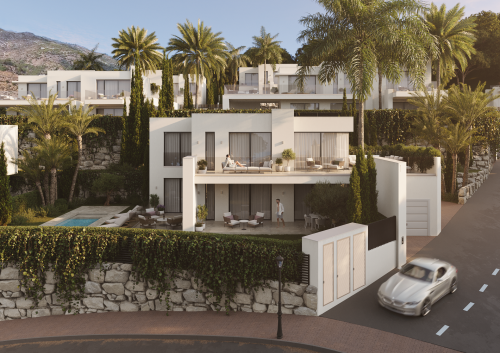
Villa for sale in Mijas Pueblo
- 4 beds
- 4 baths
- Plot: 580 m²
- Interior: 150 m²

Exclusive Villas with Stunning Views
- 4 beds
- 4 baths
- Plot: 580 m²
- Interior: 150 m²

Panoramic sea view apartment in a Prime Costa del Sol Location
- 2 beds
- 2 baths

Recently reformed, stunning six bedroom villa in Mijas, with private pool
- 6 beds
- 4 baths
- Plot: 658 m²
- Interior: 360 m²

Exceptional Luxury Equestrian Property at the Gates of Valtocado – Mijas Pueblo
- 5 beds
- 4 baths
- Plot: 41,000 m²
- Interior: 378 m²
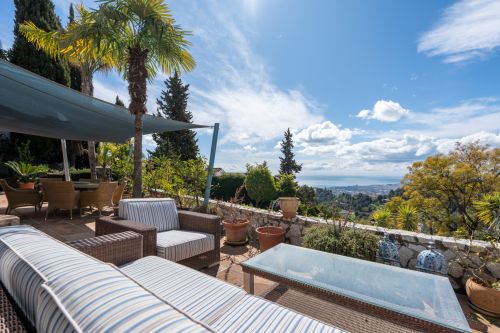
Elegant 4-Bedroom Luxury Villa Walking Distance to Mijas Pueblo
- 4 beds
- 4 baths
- Plot: 1,974 m²
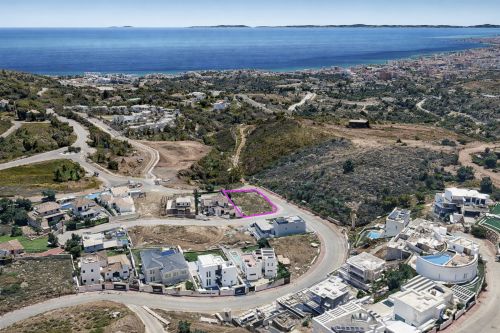
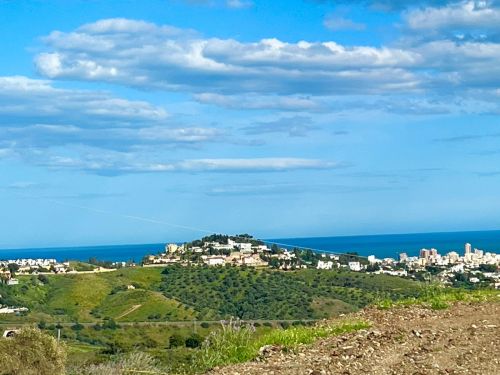
Flat plot with beautiful views in Lomas del Flamenco, close to Mijas Golf!
- Plot: 847 m²