

Area guide · The walled town Marbella grew out of
Property for Sale in Marbella Old Town
A tenth century walled town that changed hands without a fight on 11 June 1485. The wall is gone and the street plan it enclosed is not, which is the whole reason this address works.
Photograph: Nan Palmero, CC BY 2.0
in Marbella Old Town today
what the old town mostly is
on 11 June, without a battle
to the Paseo Marítimo
The place
The medina the rest of the coast was built out from
Marbella Old Town is the medina the rest of the coast was built out from. It sits between the Alameda and the castle, about a ten minute walk from the sea, and it is the one address in this series that was a town before there was a Costa del Sol to be part of.
What makes it unusual is not the age, it is the survival. The wall came down over the centuries and the plan it enclosed did not. The ayuntamiento still sits on Plaza de los Naranjos in a building finished in 1572, the market street still runs where the market street ran, and the town’s parish, its patron’s feast and its civic business are all still inside the old lines rather than out at a resort.
This guide sets out how the place came to be, what the street register tells you that no tour does, what living here is actually like, and what the numbers say, including the ones that only exist because we record them.

What is left of the castle. Two enclosures, Roman capitals built into the towers, and the streets of the old town running round the outside of it. Photograph: MarcasDeCoches, CC BY-SA 4.0.
Where exactly it is
Between the castle and the sea
The frame runs between the town’s two harbours, about a mile and a quarter of coast. The old town sits on the rise behind the promenade with Plaza de los Naranjos at its centre and the Alameda below it, the town’s own marina a short walk south west along the front, and the working harbour at La Bajadilla a little further east. From Plaza de los Naranjos everything on this map is within fifteen minutes on foot. The Golden Mile begins about a mile west, off the west edge of the frame.

- 1Marbella Old TownThe walled town itself, on the medina street plan
- 2Plaza de los NaranjosThe civic centre laid out after 1485, and the town hall of 1572
- 3AlamedaThe eighteenth century park on the southern edge of the old town
- 4Marbella marinaThe town’s own harbour, about ten minutes on foot
- 5La Bajadilla portThe fishing harbour east, with a large expansion consented in 2025
Orthophoto PNOA © Instituto Geográfico Nacional de España. Rotated so the area reads across the frame; the north mark keeps it honest. Pins mark the centre of each place, not a boundary.
There was already a town here
The one part of Marbella that was already finished in 1956
The same frame of town, flown twice, seventy years apart. In 1956 the old town is already close to the shape it holds now. What changes in the second frame happens outside the old lines rather than inside them.


Nothing was added to these frames and nothing was moved. The only thing that changes is how much of the ground around the old town is spoken for. Historic and current imagery © Instituto Geográfico Nacional de España, both rendered through one frame at one scale.
How it came to be
A walled town that changed hands without a shot on 11 June 1485
The ayuntamiento’s own history puts the origin of the old town in a Muslim settlement that may go back to the middle of the tenth century and is documented from the twelfth. The medina sat inside an oval circuit of wall with three or four gates, and above it stood the castle: two quadrangular enclosures with ten or eleven towers, Roman capitals built into their sides and Caliphal blocks in the fabric. It is the most important thing left in central Marbella from that civilisation, and it is not a ruin on a hill somewhere, it is threaded through streets people live on.
The town passed to the Crown of Castile on 11 June 1485. It capitulated rather than fell, without a battle and without blood, and the saint whose day it was, San Bernabé, was made patron in gratitude. Marbella still keeps his feast in June, with a reenactment of the entry into the town, so the date at the centre of this quarter’s history is also the week the whole place stops and celebrates.
What followed was the most important piece of town planning of its era here. Plaza de los Naranjos was laid out as the new civic centre in place of the medieval market square, and the buildings that went round it are the ones still round it: the Santiago chapel, a mosque before it was raised to parish in 1505; the Casa del Corregidor, late Gothic Mudéjar with a Renaissance stone doorway; and the town hall, finished in 1572 under a corregidor named Juan Osorio and extended eastwards in 1779 with a sundial on the new face that is still there to read. It is called Plaza de los Naranjos because orange trees were planted in 1941, replacing palms, which had replaced Indian chestnuts.
The centuries after that filled in the institutions and then outgrew them. The Iglesia de Nuestra Señora de la Encarnación went up probably over the main mosque, with 1618 cut into a heraldic plaque and a Rococo portal in ochre stone added late in the eighteenth century. Alonso de Bazán, the man who held the fortress, left money in his will in 1570 for a hospital that ran for about three hundred years and is now, after a restoration begun in 1989, Spain’s museum of contemporary engraving. The town went north out of the walls up Calle Ancha towards the alquerías and the trapiches, the mills that pressed oil and sugar, and south it laid out the Alameda in the eighteenth century, a park of twenty thousand square metres, a fifth of the whole built town at the time, with six glorietas, built benches and a fountain still running.

Calle Ancha, looking down to the church tower. The balconies stacked along these fronts are what the nineteenth century added when the gentry moved north out of the walls. Photograph: Berthold Werner, CC BY-SA 3.0.
The town changed hands without a battle, and the saint of that day has been its patron ever since.
Spain’s castles were protected wholesale in 1949 and the 1985 heritage law made them Bienes de Interés Cultural. Marbella’s is one.
Living here
A town rather than a resort
The old town never stopped being the working centre of Marbella. The ayuntamiento sits on Plaza de los Naranjos in the building finished in 1572. The Encarnación is the town’s parish church. The commercial axis the ayuntamiento’s own history traces from the sea gate to the castle, along San Juan de Dios, Gloria, Misericordia and Carmen, has kept its mercantile character for five centuries and is still where people shop. The June feria for San Bernabé is the town’s own feast. None of that was put here for visitors.
The streets are narrow because they were laid out before cars. Most of the core is pedestrian or restricted, the street is a single surface without kerbs, and a car will not follow you to your door. That is the quality people buy the old town for and it is also the drawback, because parking is a separate decision from buying and needs settling before you commit rather than after.
Healthcare is unusually close for a historic centre. Hospital Costa del Sol, the public hospital for the nine municipalities of the western Costa del Sol, is on the A-7 about ten minutes east. Private cover is nearer still, with Hospital Ochoa a few minutes east of the walls and Quirónsalud Marbella and HC Marbella both a short drive, and a public health centre sits inside the old town on Calle Leganitos.
The sea is a walk rather than a drive. It is about six hundred metres from Plaza de los Naranjos down through the Alameda and the Avenida del Mar to the promenade, roughly ten minutes on foot, and the same avenue carries the ten Dalí bronzes on the way. The coastal path is being joined up along the whole province as the Senda del Litoral, about a hundred and eighty kilometres from Manilva to Nerja, of which roughly four fifths is already walkable.

A shopping street in the old town in the middle of the day. A plan drawn before cars, kept, is why the trade is still on foot and why a car will not follow you to your door.
Schools
The state schools are inside and around the walls; the international schools most Marbella buyers use, Swans and the British International School of Marbella, are ten to fifteen minutes west on the Golden Mile hillside.
Healthcare
Hospital Costa del Sol on the A-7 about ten minutes east, Hospital Ochoa minutes away, Quirónsalud Marbella and HC Marbella a short drive, and a health centre inside the old town.
Getting about
Most of the core is pedestrian or restricted. Málaga airport is about forty minutes east and Gibraltar around an hour west. There is no train to Marbella.
The harbours
The town’s own marina is about ten minutes on foot. La Bajadilla, the fishing harbour east of it, has a 100 million euro expansion with a cruise terminal cleared in 2025.
What things cost
What is asked, and what was paid
Two numbers both get called “the price” here, and setting them side by side without saying which is which is how a guide contradicts itself. So they are kept apart. Registered sale prices are only published by postcode, and 29601 is the old town’s own postcode, shared with central Marbella immediately west of it. That makes the deed figure below a fair reading of this part of town rather than a borrowed one, and the asking prices are the old town’s alone.
Asking prices, per square metre
The bar is the middle half of what is being asked for each type in Marbella Old Town right now, from the cheapest quarter to the dearest. The number in the row is the typical figure. Nothing here has necessarily sold at these prices; that is what the panel beside it is for.
Asking prices per built square metre, resale stock listed in Marbella Old Town, 46 properties in total, as at 8 August 2026. From our own records.
What buyers actually paid
Every figure here is a registered deed price, the amount declared in front of a notary when the sale completed, for postcode 29601. Homes completed this year at a typical €4,347 per square metre, 7 per cent below Marbella as a whole. Houses went for €5,033 over an average 271 square metres, against €4,924 for a house in Marbella as a whole.
Read the two panels together and the lesson is the usual one: asking prices run over standing stock, which quietly accumulates every overpriced home that never sells, while deeds count only what traded. The gap between them is mostly that selection effect, not a discount waiting to be claimed.
- Postcode 29601, all homes€4,347586 deeds
- Postcode 29601, apartments€4,049514 deeds
- Postcode 29601, houses€5,03372 deeds
- Marbella, all homes€4,6654,037 deeds
- Marbella, houses€4,924776 deeds
JUST Real Estate analysis of registered deed prices, Portal Estadístico del Notariado, rolling 12 months, captured 15 August 2026. Postcode 29601 covers the old town together with central Marbella. Prices are moving: the official house price index for Andalucía rose 4.1 per cent in the year to 2025 Q4 (INE); the index is not published below regional level.
What you can buy
The stock that actually exists here
for sale in Marbella Old Town
61% of the stock
13% of the stock
No official body publishes what is available to buy, only what has already sold, so this part comes from our own intelligence. Through our network memberships we see every resale property listed through an agency on this coast, which means we know both what is genuinely on the market in Marbella Old Town and where the same home is being advertised more than once. This covers resale stock only, not new construction sold directly by developers.
The shape of what comes to market is the shape of a medieval town. Almost everything for sale is an apartment or a penthouse in a small building, with a scattering of duplexes and a real amount of commercial space, because the ground floors on the old market streets are shops and have been for centuries. Houses on their own plots barely appear and land does not appear at all: there is nowhere left to draw a plot inside the walls, and the protection on the castle and its surroundings means nobody is going to. The consequence for a buyer is that choice here is thin at any given moment and the right home tends to be a matter of timing rather than selection.
- Apartments2861% of listings
- Penthouses613% of listings
Resale stock listed in Marbella Old Town as at 8 August 2026, from our own records. Treat it as accurate to within five to ten per cent: a few near identical apartments in the same building are not always recognised as the same home when the sources are brought together.
Asking prices and supply as at 8 August 2026 · deed prices captured 15 August 2026 · refreshed each week
Marbella Old Town compared to nearby areas
The Marbella town ladder, in order
The old town, the centre it runs into and the coast west of both. They do not trade level and they do not sell to the same buyer. Two cells here say so rather than guess. Marbella Centro carries too few listings for a reliable asking figure at all, and neither it nor the old town has enough listings publishing an IBI bill and a community charge for us to state a running cost. That is a consequence of how little comes to market inside the walls, which is itself worth knowing.
| Address | Typical asking, per m² | Listed | Running costs, per year | Character |
|---|---|---|---|---|
| Marbella Old Town | €3,797 | 1 | too few to say | The walled town, apartments on a medieval plan |
| Marbella Centro | €2,937 | 1 | too few to say | The nineteenth and twentieth century town immediately west |
| The Golden Mile | €8,581 | 862 | €6,967 | The coast road west, beach clubs and large plots |
| Nagüeles | €6,561 | 86 | €3,597 | The first hillside above the Golden Mile, quieter and greener |
Typical is the median asking price per built square metre for houses and villas listed in each area (apartments where an area has no villa stock) as at 8 August 2026; running costs are the median annual IBI plus community charge where enough listings publish them. From our own records.
The honest way to read this table is that the old town is not competing with the other three. It sells a walkable life inside a protected historic centre, and they sell space, garden and a car in the drive. A buyer who wants both usually ends up owning here and visiting there, or the other way round, and which way round it goes is a conversation rather than a table.
Wider context: our guide to Marbella, area by area, and our property market data behind every figure on this page.
Who buys here
Three buyers, and what Marbella Old Town gives each of them
The year-round home.
This is the strongest case the old town makes, and it has nothing to do with the weather. The civic business of the town is still conducted here, the shops on the old market axis are shops rather than concessions, and the June feria is the town’s own. You can buy a home here and not need a car to have a life.
The lock-up-and-leave.
Most of what comes to market is an apartment in a building of a handful of homes, on a street where a car cannot follow you to the door. That suits an owner who wants to close a shutter and fly, and it suits nobody who wants a garden and a gate.
The long hold.
Supply here is fixed in the hardest way there is. The castle and its walls carry the top rank of the Spanish heritage register, the plan inside them is medieval, and no scheme is going to add a storey or widen a street. What exists is what there will be, and very little of it is for sale in any given month.
Common questions
Questions we are asked about property for sale in Marbella Old Town
Can you drive in Marbella Old Town?
Mostly not. The core is a mixture of fully pedestrian and restricted traffic streets laid out long before cars, with a single surface and no kerbs. Access and deliveries are handled street by street, so check the arrangement for a specific address, and treat parking as a separate purchase rather than an assumption.
Is Marbella Old Town walking distance from the beach?
Yes. It is about six hundred metres from Plaza de los Naranjos down through the Alameda and the Avenida del Mar to the promenade, roughly ten minutes on foot. The town’s own marina is about the same, and the fishing harbour at La Bajadilla a little further east.
What type of property for sale in Marbella Old Town is most common?
Apartments, by a distance. Of the 46 resale properties currently listed here, 28 are apartments and 6 are penthouses, with almost no houses on their own plots and no land at all. There is nowhere left to build inside the walls.
Is the old town protected, and what does that mean for a buyer?
The castle and its walls sit at the top of the Spanish heritage register, as Bienes de Interés Cultural, under the blanket protection Spain applied to its castles in 1949 and carried into the 1985 heritage law. In practice, work on a building near them is slower and more closely controlled than elsewhere in Marbella, which is why the quarter still looks the way it does. Have the position on any specific property checked before you commit.
Why is it called Plaza de los Naranjos?
Because of orange trees planted in 1941, which replaced palms, which had replaced the Indian chestnuts that were there first. The square has also been Plaza Mayor, Plaza de Riego and Plaza Isabel II, and it was laid out as the town’s new civic centre after 1485.
How old is Marbella Old Town?
The ayuntamiento’s own history traces it to a Muslim settlement possibly of the middle of the tenth century, documented from the twelfth, enclosed by a wall with three or four gates. The town passed to the Crown of Castile on 11 June 1485, and the plan you walk today is substantially the one that existed then.
For sale now
Current property for sale in Marbella Old Town
What is for sale in Marbella Old Town on our site right now, updated as listings come on and go off. For more detail on any home, or to arrange a viewing, get in touch with the team.
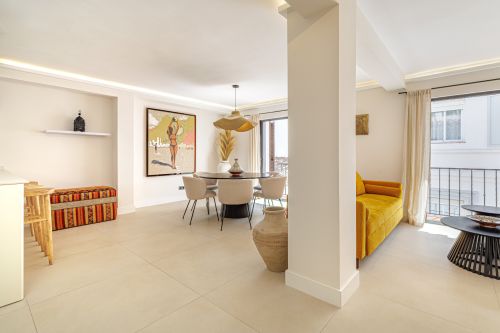
3 bedroom apartment for sale in Casco antiguo, Marbella
Located in the heart of Marbella’s historic Casco Antiguo, this beautifully renovated apartment presents a rare opportunity to enjoy authentic Andalusian charm combined with modern comfort in one of the Costa del Sol’…
- 3 beds
- 3 baths
- Interior: 134 m²
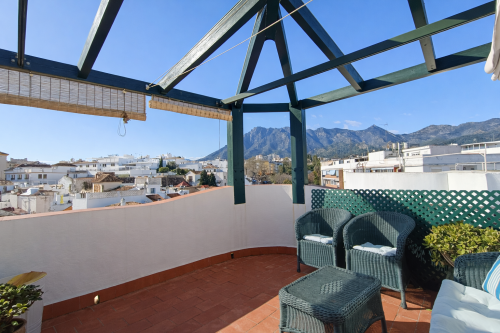
2 bedroom penthouse for sale in Casco antiguo, Marbella
Located on the fifth floor of a building in very good condition in the centre of Marbella, this 104 m² attic apartment stands out for its character, brightness and panoramic views of the mountains and the town centre.…
- 2 beds
- 1 Bath
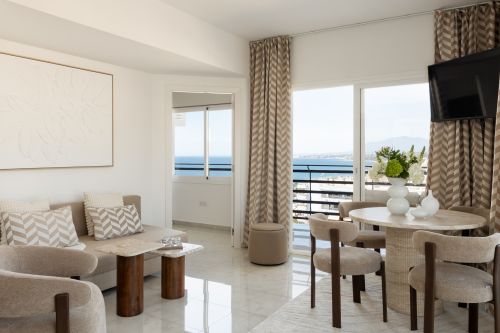
1 bedroom apartment for sale in Casco antiguo, Marbella
Beachfront Investment in Central Marbella. Turnkey 1 bed apartment with rental license guaranteed for new owners. Ready for immediate move-in or rental. The community can fully manage your rentals, including bookings…
- 1 Bed
- 1 Bath
Free download
The Marbella Buyers Guide
Everything a buyer needs before the first viewing in Marbella Old Town or anywhere else on the coast: the purchase process step by step, the taxes and fees, the checks that decide whether a property is sound, and how the market has actually been behaving.
- ProcessReservation, private contract, completion at the notary, and the timings between them.
- CostsTransfer tax, VAT on new build, notary, registry and legal fees, worked through on a real price.
- ChecksCadastre, land registry, planning status, community accounts and running costs.
Prefer to read it online? The buyers guide page. Every figure on this page sits in our property market data.

Talk to us
Tell us how you want to live in the old town
The old town is small, the stock is thin and the right home here is usually a question of timing rather than choice. Tell us what the days should look like, and we will tell you when something that fits comes up, with the honest drawbacks of the street and the building in front of you before you view.
A person reads this and a person replies, usually the same day. No automated drip, no passing your details to another agency, and no obligation to view anything.
JUST Real Estate was founded in Marbella in 2015. We have 25 years of experience in this market.
