The Tax Cut
Estepona has just written a new chapter in its modern success story, announcing a 20% reduction in property tax bills after officially clearing the last of its municipal debt. For a town that once carried one of the largest liabilities in Spain, over €300 million, the transformation is remarkable. The result is more than fiscal relief for residents; it’s a powerful signal to buyers and investors that Estepona is combining lifestyle allure with long-term financial stability.
According to recent reports in Olive Press News Spain, Euro Weekly News, and Travel And Tour World, the tax cut will benefit nearly 38,000 property owners, delivering around €6 million in collective savings this year alone. These reductions, already visible in August’s billing cycle, form part of a broader trajectory: Estepona has been progressively lowering its IBI rate for over a decade, cumulatively cutting local property taxes by about 50%.
For homeowners, this easing of costs changes the financial equation. Annual bills for second-home owners and full-time residents alike will shrink, making Estepona more attractive to both lifestyle buyers and investors calculating long-term ownership costs. In a coastal market where IBI payments can represent a meaningful part of recurring expenses, a 20% cut is not symbolic, it is material.
A Decade of Transformation
Behind the numbers lies a larger narrative of transformation. Only a decade ago, Estepona faced severe financial dysfunction, including unpaid suppliers and even difficulties maintaining basic services. Under sustained fiscal management, the municipality has erased its debt while simultaneously investing in public amenities, urban renewal, and cultural infrastructure. Today, the town’s upgraded seafront promenade, cultural centres, and landscaped boulevards stand as visible proof of how governance and investment can work hand in hand.
The impact for real estate is direct. Investors often weigh not only lifestyle and location but also the underlying health of the municipality they are buying into. A debt-free Estepona with lower annual property costs signals stability, prudence, and a willingness to return value to its residents. In a region where confidence drives premium valuations, this kind of fiscal discipline is a differentiator.
It also aligns with broader market trends. The Costa del Sol has been experiencing one of its strongest cycles of tourism recovery and property demand, with international buyers continuing to seek Mediterranean homes. Marbella often anchors this narrative, but Estepona has increasingly emerged as a quieter, equally compelling counterpart. The tax cut strengthens its hand further. Lower annual outgoings enhance rental yield calculations, and a municipality free of debt creates confidence that future investment in infrastructure will not depend on raising levies again.
Looking Forward
Observers from Travel And Tour World noted that Estepona’s tax relief comes alongside continued investment in the town’s image as a premier destination. From year-round cultural programming to the celebrated “Garden of the Costa del Sol” initiative, Estepona has positioned itself not just as a satellite to Marbella but as a destination in its own right. The property market reflects this evolution: international buyers are not only purchasing villas in established enclaves but increasingly looking at contemporary beachfront apartments, secure gated communities, and hillside estates with panoramic views.
Critically, this tax cut is not a one-time headline. It is the culmination of a decade-long strategy of fiscal responsibility, and officials suggest that further easing may be considered in future years if revenues continue to strengthen. For property owners, that continuity matters. It creates predictability in ownership costs, reassuring both residents and those eyeing long-term investments.
What does this mean for the Costa del Sol as a whole? Estepona’s achievement raises the competitive bar. Municipalities across the region face the same balancing act between encouraging growth and maintaining fiscal stability. By demonstrating that debt can be erased while still delivering infrastructure and lowering taxes, Estepona positions itself as a model of governance in Andalucía. For buyers comparing options between Marbella, Benahavís, and Estepona, the clarity of this story adds weight to Estepona’s value proposition.
The broader lesson is simple: in real estate markets driven by lifestyle, trust, and perception, the financial health of a town matters. Estepona’s 20% property tax cut is therefore more than a relief line in a household budget, it is a signpost of confidence for the future. For those seeking both beauty and balance, Estepona has rarely looked stronger.
Our latest listings
View our latest listings of luxury properties for sale, where sophistication and comfort come together for an exceptional living experience.
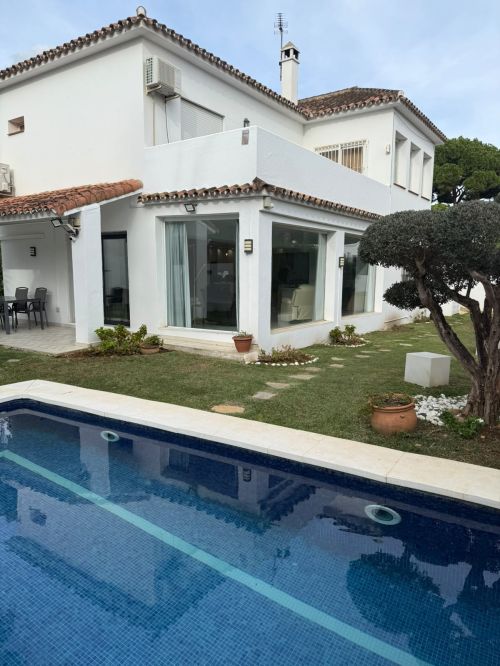
4 bedroom villa for sale in Nagüeles, Marbella Golden Mile
- 4 beds
- 3 baths
- Plot: 409 m²

2 bedroom ground floor apartment for sale in Mansion Club, Marbella
- 2 beds
- 2 baths
- Interior: 157 m²

2 bedroom ground floor apartment for sale in Bel Air, Estepona East
- 2 beds
- 2 baths
- Interior: 90 m²

Just Get in touch
The Data Behind This
For the transaction and price data this sits against, see our Estepona property market report.