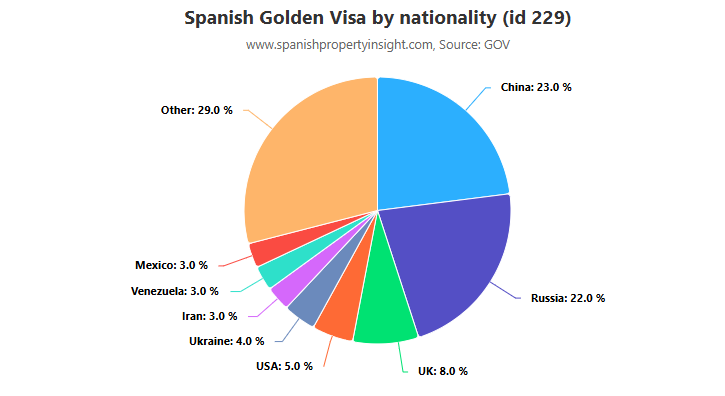
Spain’s Golden Visa program, a landmark policy aimed at attracting foreign investment, is officially being phased out. Introduced in 2013, the scheme allowed non-EU nationals to gain residency in exchange for significant investments in Spanish real estate, public debt, or businesses. However, recent political developments have led to the government’s decision to end the program by early 2025. While this marks the end of an era for investment-based residency in Spain, it also signals a broader trend across Europe, as other nations reconsider the impact of such schemes on their housing markets and social structures.
The Golden Visa: A Brief Overview
Spain’s Golden Visa program was launched in the aftermath of the 2008 financial crisis, with the goal of attracting foreign capital to stimulate the economy. By offering residency permits in exchange for investments, primarily in real estate, Spain successfully attracted high-net-worth individuals, particularly from countries like China, Russia, and the Middle East. The minimum investment required for eligibility was set at €500,000 for real estate, €2 million for government bonds, or €1 million in Spanish businesses
The program quickly gained popularity. Between 2013 and 2023, over 14,000 Golden Visas were granted, with real estate investment accounting for the largest portion. These investors enjoyed several benefits, including residency rights, visa-free access to the Schengen Area, and the ability to bring family members under the same residency conditions. This made the Golden Visa an attractive proposition for wealthy individuals seeking a foothold in Europe
The End of the Golden Visa Program
In a move that reflects growing concerns about housing affordability and wealth inequality, Spain’s Congress approved the end of the Golden Visa program in November 2024. The decision followed an announcement by Prime Minister Pedro Sánchez earlier in the year, highlighting that the program would be phased out by January 2025. Under the new legislation, investments in real estate and other assets that were previously eligible for residency will no longer grant residency permits
The timing of this decision is significant, as Spain’s housing market has been under scrutiny for the impact of foreign investment. Critics have argued that the influx of international buyers, particularly through the Golden Visa, has driven up property prices, making it harder for locals to afford homes. This has become a contentious issue in major cities like Madrid, Barcelona, and areas on the Costa Brava and Costa del Sol, where property values have soared due to foreign demand
Moreover, there has been increasing pressure from EU authorities to reconsider such programs, which have often been seen as vehicles for asset accumulation rather than genuine economic contribution. The Golden Visa scheme, while successful in bringing capital to Spain, has been criticized for allowing wealthy individuals to bypass local labour markets and contribute minimally to the country’s broader economic needs. The decision to end the program is part of Spain’s broader shift towards more sustainable and inclusive growth
Transitional Provisions for Existing Applicants
While new applications will no longer be accepted after the end of 2024, Spain has introduced transitional provisions to protect those who have already invested under the Golden Visa scheme. Individuals who submit applications before the deadline will still be able to benefit from the residency program, and those who already hold a Golden Visa will not lose their status. This ensures that existing investors are not unfairly affected by the policy change
For those already in the process of securing a Golden Visa, now is the time to act. Applications submitted in the coming months will still be processed under the existing rules, allowing investors to benefit from the privileges of the program before it officially closes. This has led to a final surge in applications, as investors rush to take advantage of the remaining window
Broader European Trends and Implications
Spain’s decision to end its Golden Visa program is not an isolated event. It reflects a broader trend across Europe, where countries are reconsidering the sustainability of investment-based residency programs. In recent years, Portugal and Greece have both made significant changes to their Golden Visa schemes, with Portugal eliminating the real estate investment option in 2023 and Greece tightening its rules on property purchases
Portugal, for instance, still offers residency through other means, such as fund subscriptions, business creation, or scientific research. However, the real estate route, once the cornerstone of the program, is no longer available in most regions. Greece has similarly introduced a tiered investment system, adjusting requirements based on the location of the property, while raising the minimum investment threshold
These changes reflect growing concerns about the long-term impact of such programs, particularly on local housing markets. As housing affordability continues to be a critical issue in many European countries, governments are under increasing pressure to ensure that foreign investment benefits the broader economy, not just the wealthiest segments of society. Spain’s decision to wind down its Golden Visa program is part of this ongoing reassessment